Follow me down a country road to the past, captured by the camera of one of the great photographers of the early 20th century.
The Flower Shows of the 30’s, Peacocks to Elephants, The Native Americans of Montana, Battle Flags of the Revolution, these are just a few of the talking points we will discuss on our travels created by the David Davidson Studios of Providence R.I.
This story is about a very ambitious young man who started a small, family-based business in Providence Rhode Island at the turn of the 1900’s. He grew this business into one of the leaders in the field of hand colored photography. And to a larger degree, helped that art form become a contributing part of the Arts and Crafts movement that influenced our country in many ways.
I have been fortunate enough to have started collecting David Davidson’s work 40-45 years ago. And as they say in “the business”, I was in the right place at the right time.
I hope to be able to share my collection and the knowledge I’ve acquired, touch base with old friends and meet new ones. Along the way, I’m sure I will learn a few things myself and possibly help create a few new Davidson collectors.
So subscribe below and let the Story begin!
Thank you, Mike Pellegrino
*TO LEAVE A COMMENT –
Private Comment – Email Mike Directly MikePellegrino111@gmail.com
Public Comment – Click a Blog Post title and comment within the post by entering your name and email address. These posts will be visible to all, once it is authorized by Mike.
You’ve read in the blog posts, mention of the connection between Brown University and David Davidson just a few times so far. But this connection to Brown University runs deep into the Davidson family, in the Davidson business and into many of the artifacts that I have in my collection.
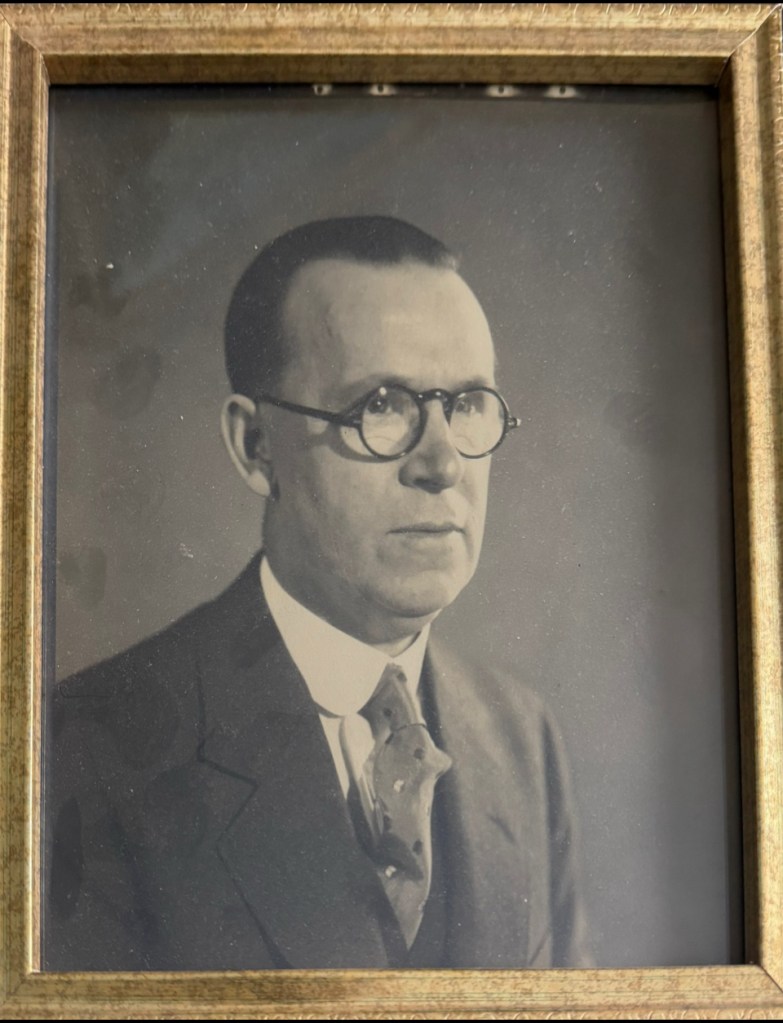
The connection between David Davidson and his education started with his mother’s guidance, backed by her strong yankee determination to have her sons become men of good character. David, the youngest of 5, worked his way through Brown University.
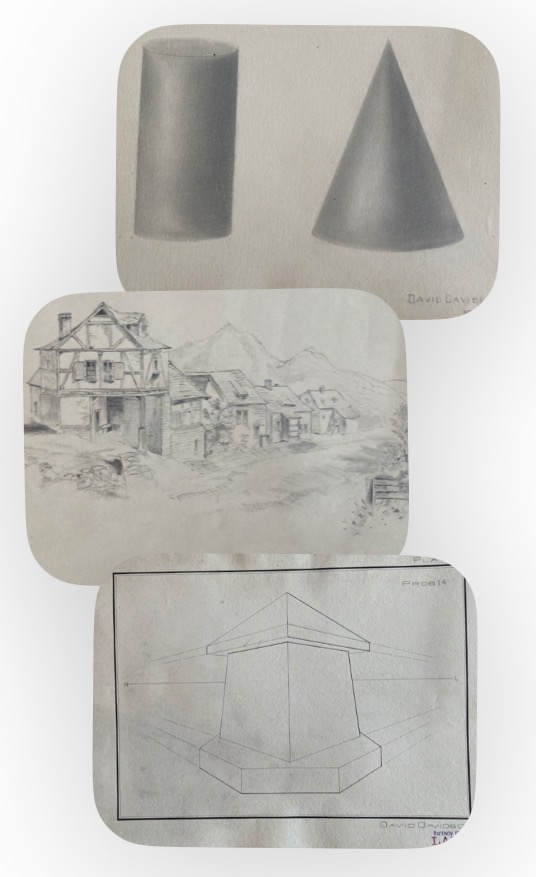
Young Davids pursuit of his engineering degree from Brown actually began while he was still in high school. The 50+ architectural drawings I have in my collection, all signed and dated, go back to 1900. 1900 would have been the year David was a senior in high school, 1901 & 1902 Davids freshman and sophomore years at Brown.
Screenshot
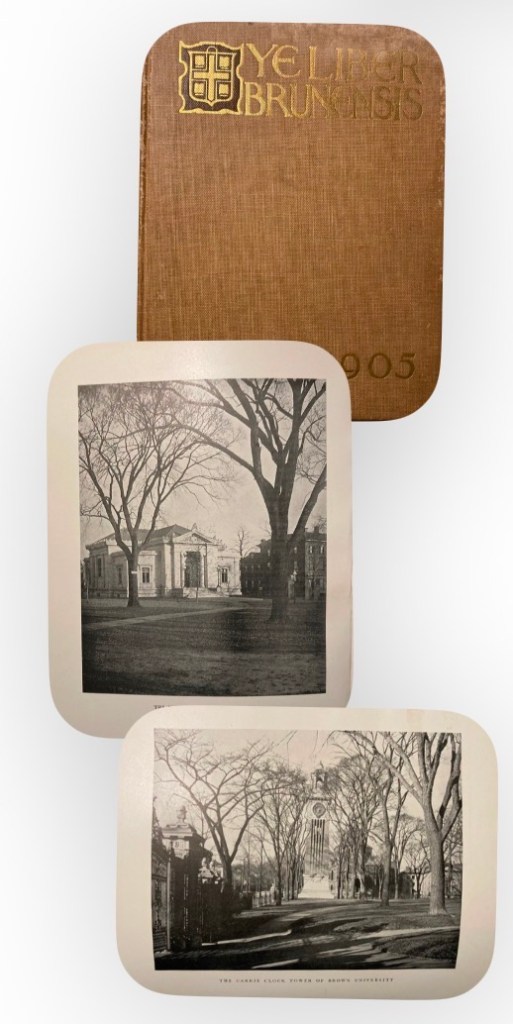
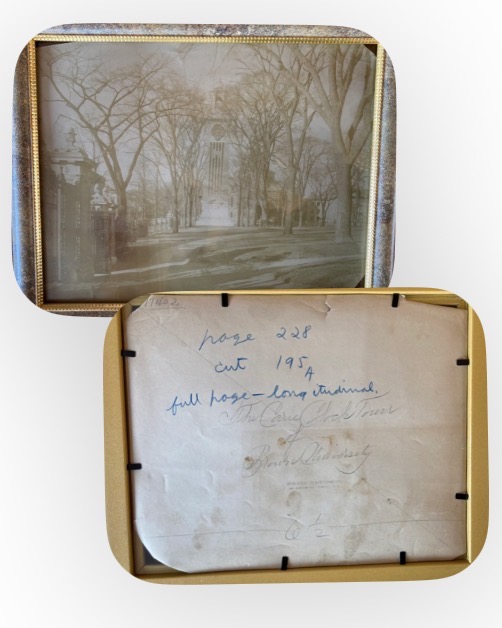
In 1903, David Davidson entering into his junior year at Brown (if you remember reading back in blog post #1) was also building a photography studio in his parents attic. In 1904 at Brown, David was doing pictures for the upcoming 1905 yearbook. The photos of the John Carter Brown Library, and the photo of the Carrie Clocktower in the 1905 yearbook, were the work of David Davidson.
Screenshot
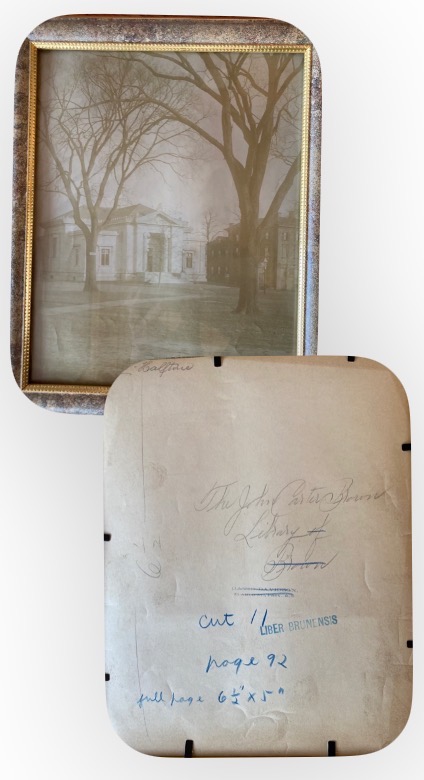
The original sepia tone photos that Davidson took to create the yearbook photos are part of my collection. Note that the back of the photos have his notes.
ScreenshotScreenshot
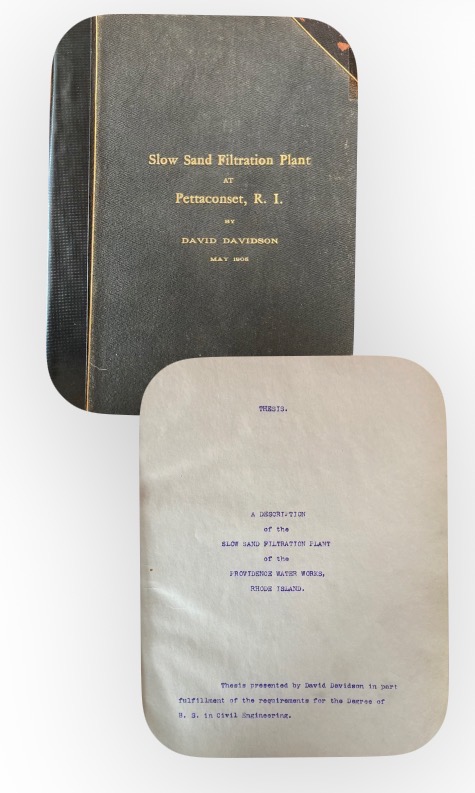
Davidson’s civil engineering degree was completed with his thesis paper, which I also have as part of my collection.
Screenshot
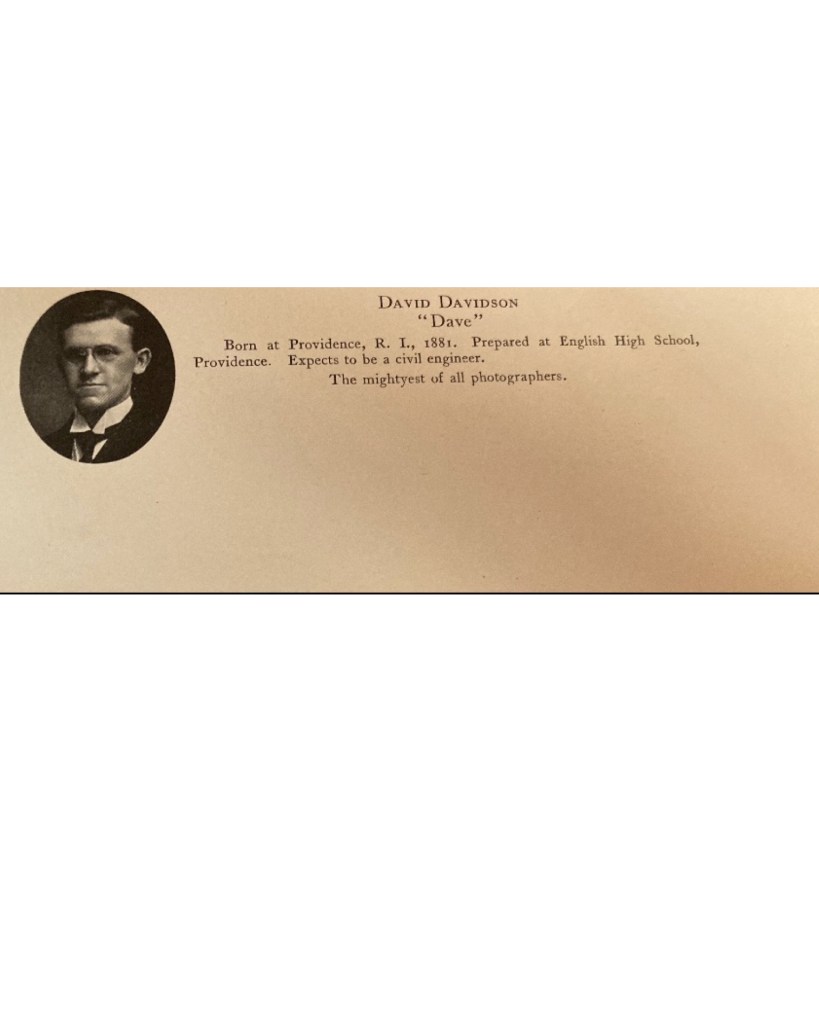
The yearbook photo with his classmates referring to him as “the mightyest of all photographers” continues to make that connection.
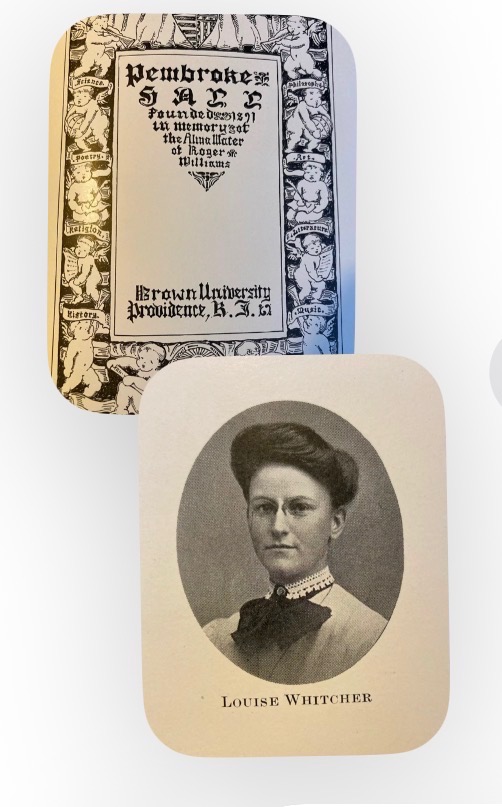
And last but not least, the Pembroke Girls College, part of Brown University Class of 1905. Graduates include this photo of Louse Whitcher, who in 2 years was to become Davids wife and partner in business.
Screenshot
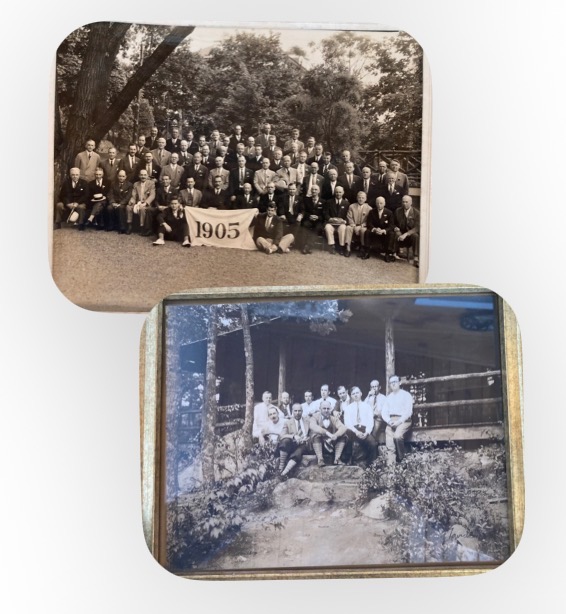
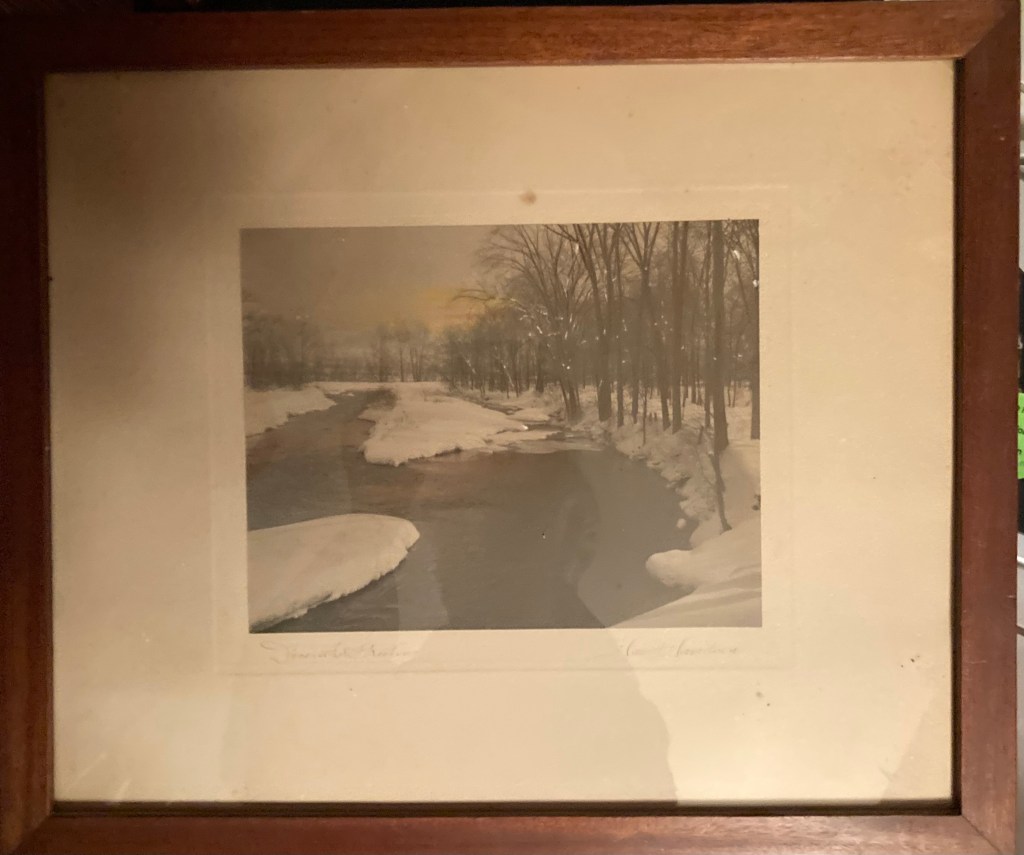
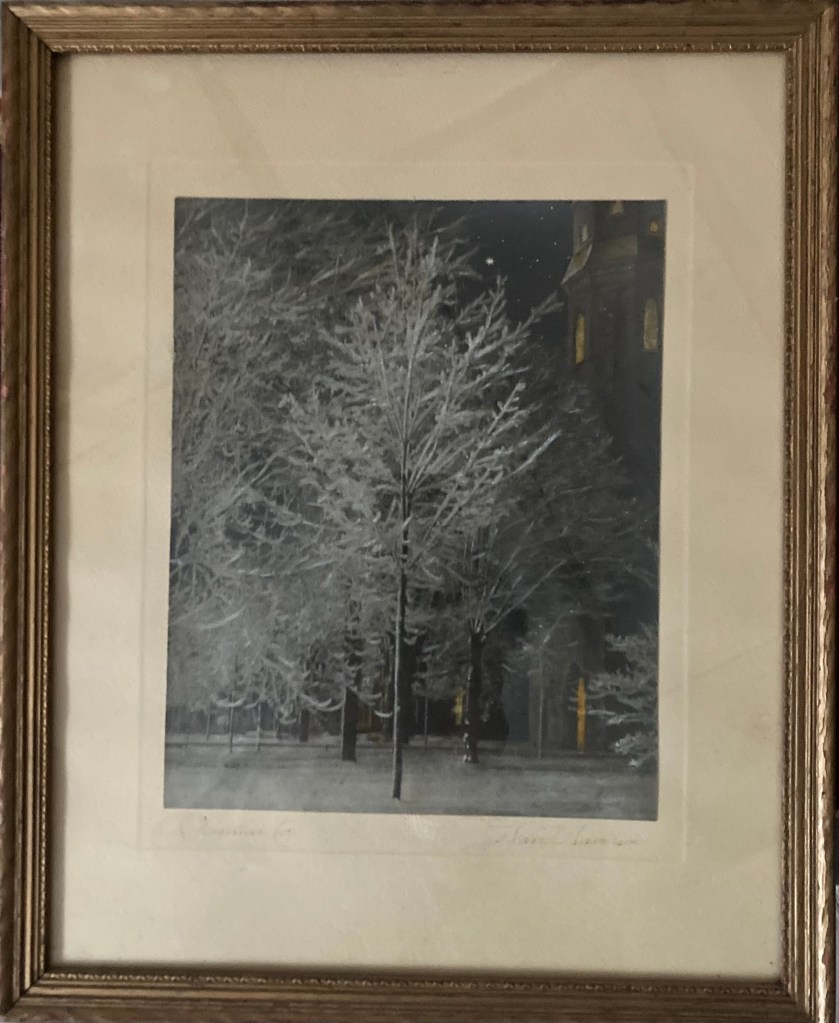
Following college, I have a few pictures that continue the Brown University connection. Two are the snow pictures that we just looked at in the last blog post; Christmas Eve and Holy Night. Davidson took these around 1920 at Brown. This University reunion photo from my collection was take in 1935. David is back row, center.
Screenshot
“Where Am I At” is of David and his college buddies, probably taken after a class gathering 1930’s-1940’s. David is the last on the right.
The connection between Brown University and David Davidson seemed to continue through the years. I recently was informed by the Davidson family that David was secretary of his class and continued the position for decades, beyond 1905. Also brought to my attention was that both of David’s sons; David L. and Donald, received their college degrees from Brown.
As much as Davids career seemed to go in a completely different direction than civil engineering, that need for perfection that his education required and his mothers determination to have her son become a man of good character, had much to do with the success of David Davidson Studios.
Other Davidson connections? Stories for another day…
The first year of The David Davidson Story is coming to a close. I hope everyone has enjoyed reading the blog posts half as much as I’ve enjoyed writing them. Every time I dig into my archives to put together the next story, I come up with even more ideas. So the stories to follow are endless.
I thought I would end the year doing something holiday related and what do I stumble into? A holiday message from The Davidsons.
I’ve put it together with all of the Holiday, Christmas, and Thanksgiving, pictures and greeting cards I could find in my collection. Hope everyone enjoys it!
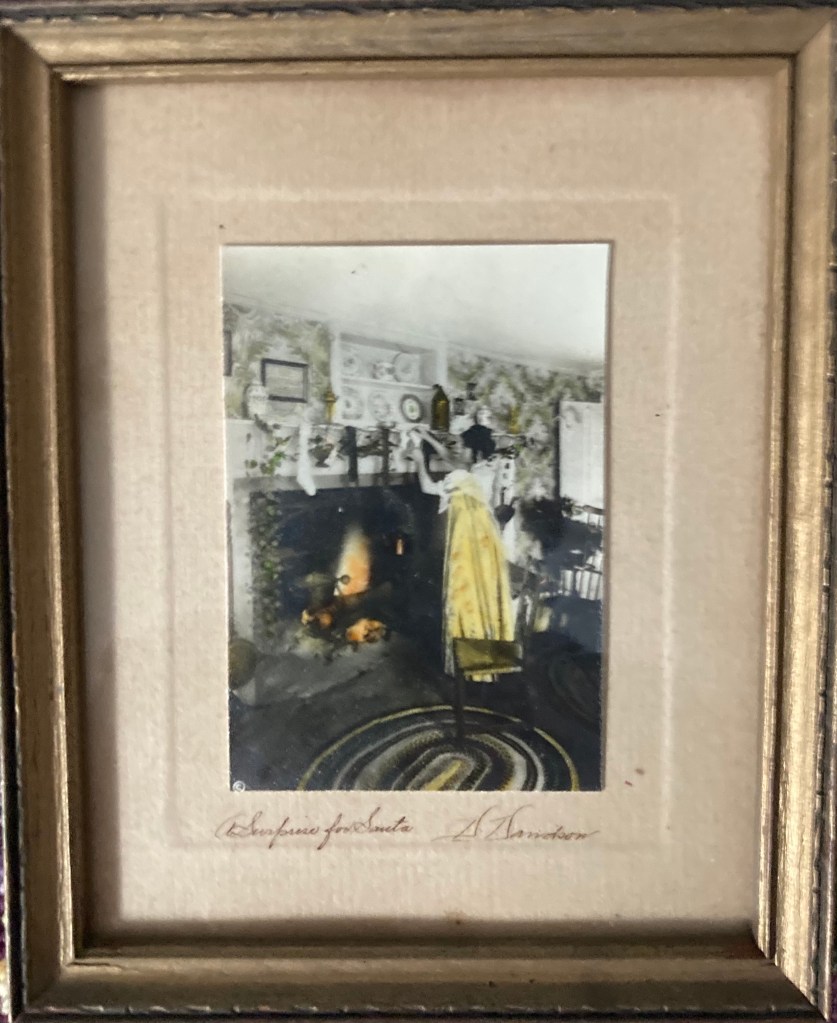
A Surprise for Santa
Thanksgiving Afternoon
December Greeting
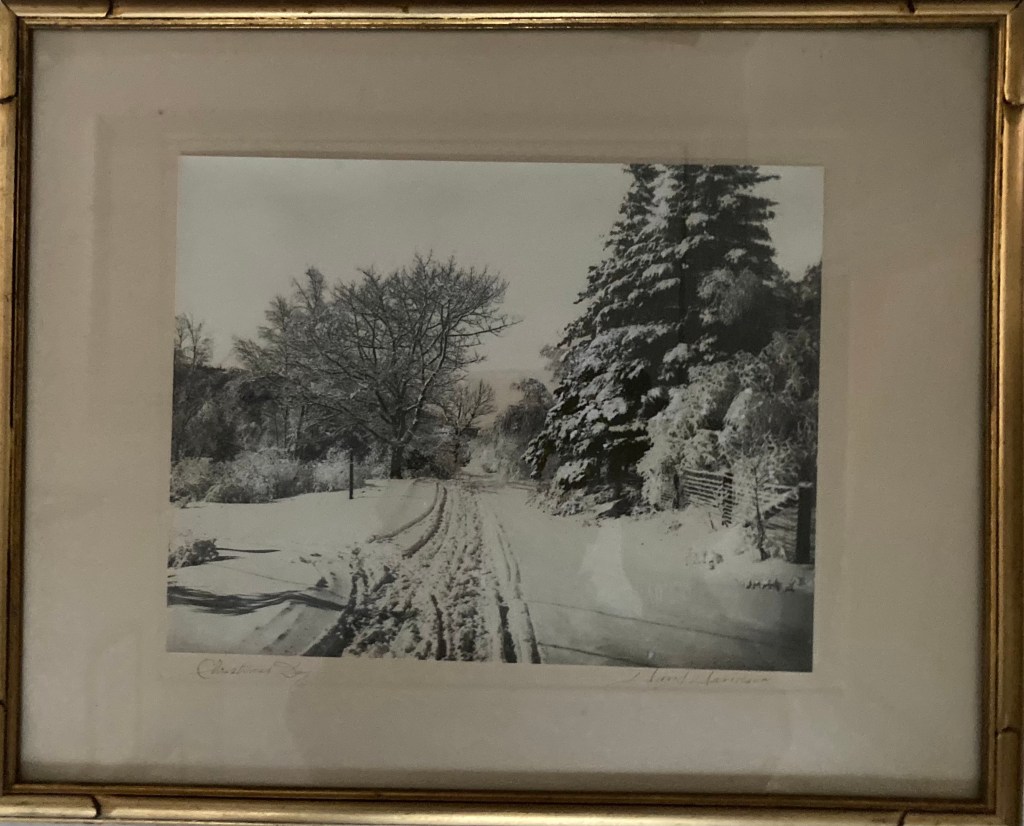
Christmas Day – This is probably the most popular Davidson Christmas picture.
Christmas Morning
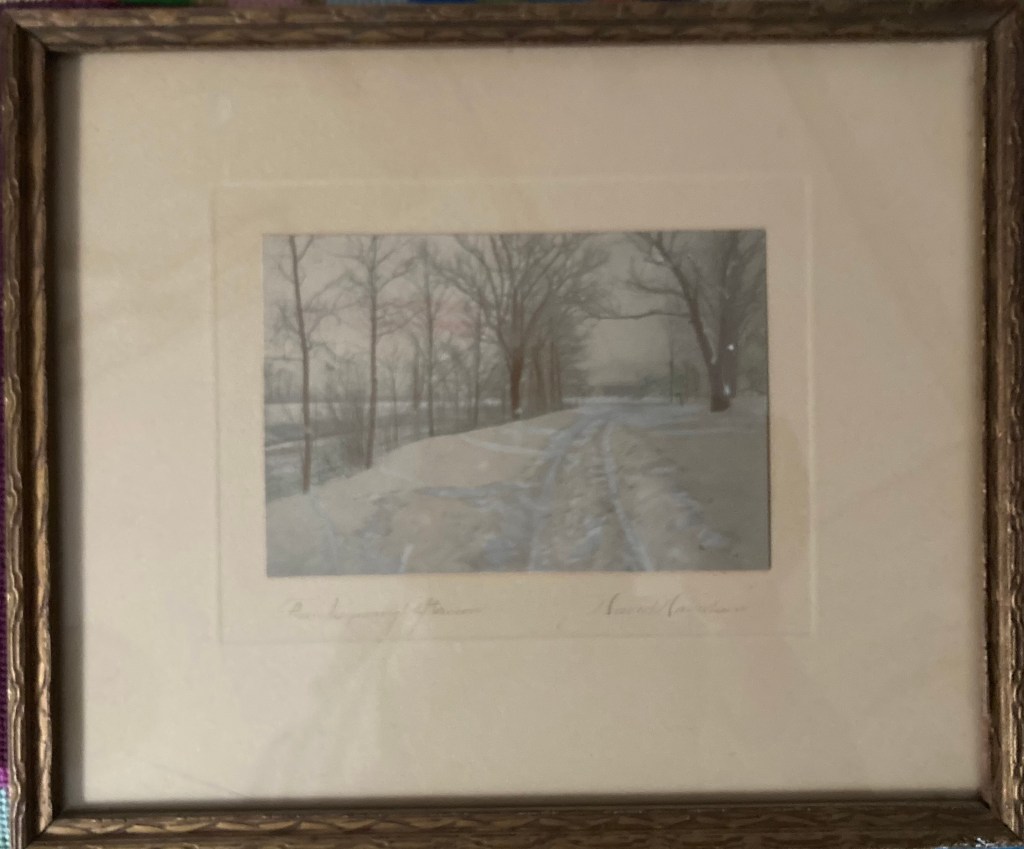
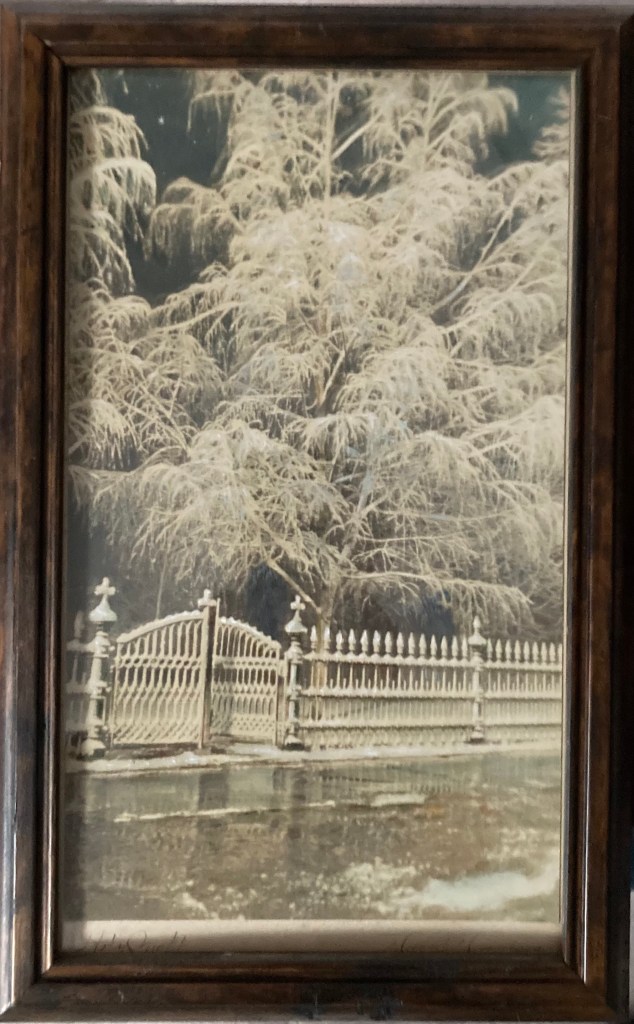
Christmas Eve – The lights in the windows behind the snow decorated trees, is Brown University.
Santas Nursery
Holy Night – This picture, I’m sure, was taken on the same evening as Christmas Eve at Brown University. I have never seen another copy of this picture. If you have, please let me know!
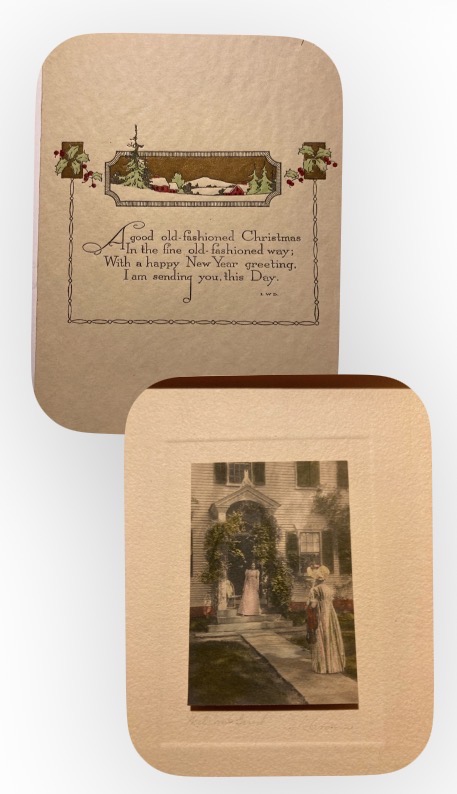
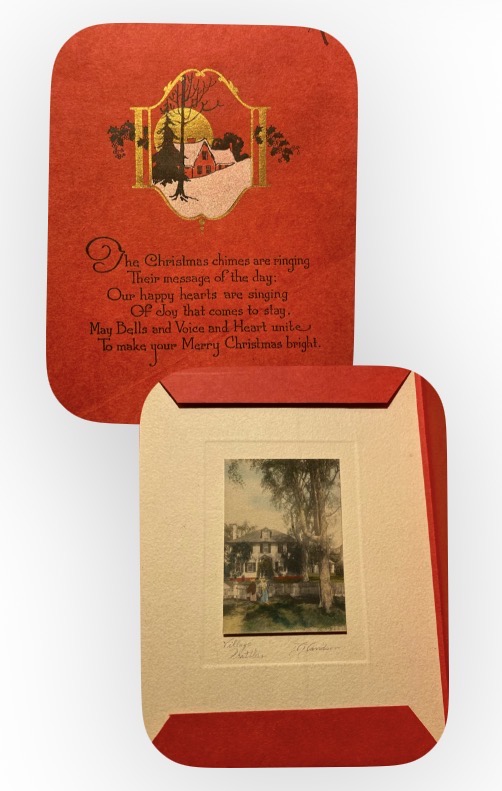
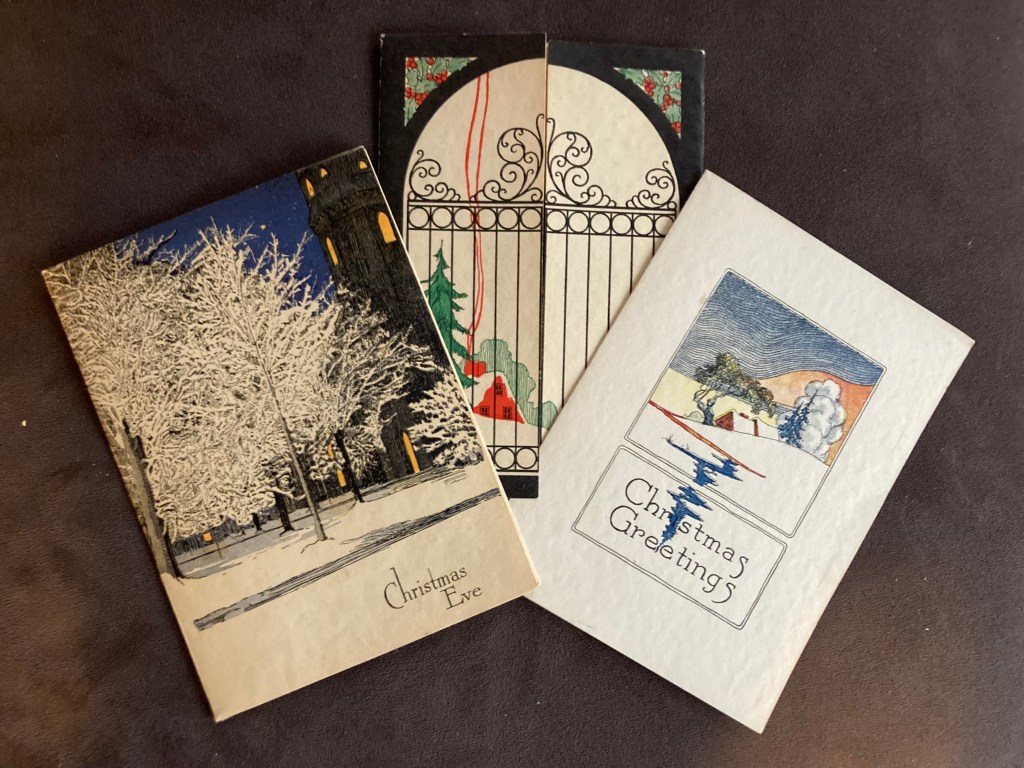
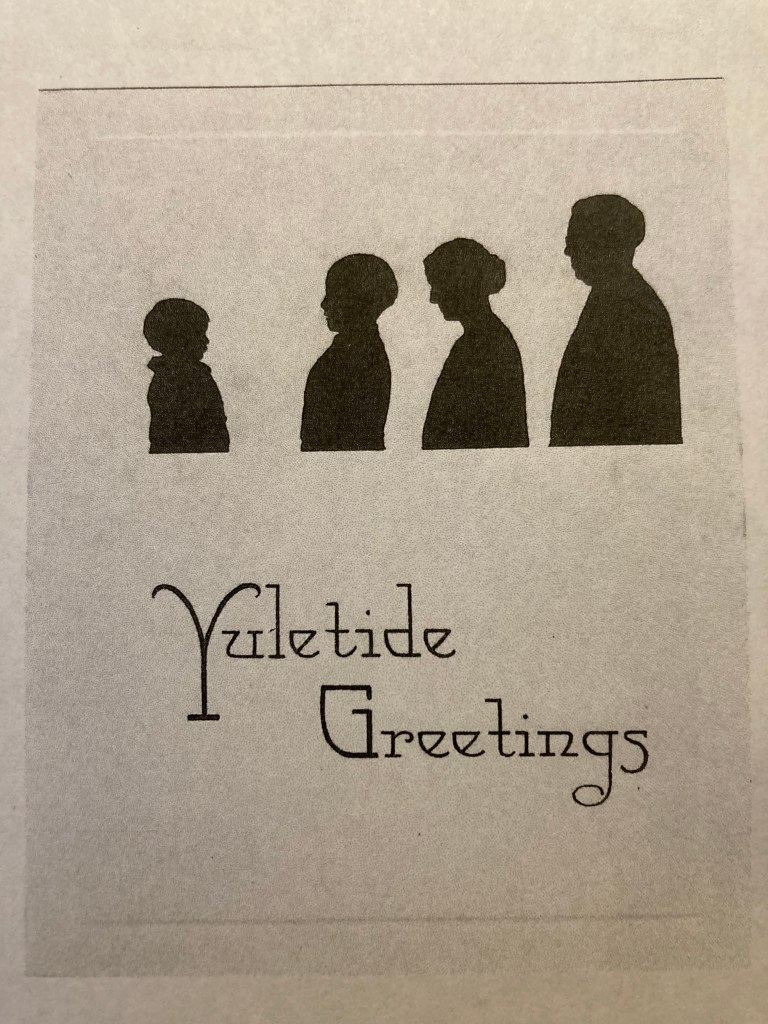
David Davidson Studios has a line of greeting cards. Creating these cards required all of the talents of everyone in the small family business. From the photography, and hand coloring, to the design work. Maybe most important of all was the poetic ability of Davidson’s wife Louise to create the appropriate poem to tie it all together. The most popular of these greeting cards were those to celebrate Christmas. These 2 page greeting cards came with a mini hand colored photo, mounted to a 5″ x 7″ mat.
Here I’ve put together what I’ve found in going through my greeting card collection…
A Good Old Fashioned Christmas with photo insert.
The Christmas Chimes with photo insert.
2025 was a great start for The David Davidson Story. Made some new friends and talked again to some old ones. And I’ve interested a few people in David Davidson who didn’t know who he was a year ago.
2026 will be exciting. So much to share with all of you!
Let me end with wishing everyone a Merry Christmas and a Happy New Year.
And let me mention my daughter Jennie, who puts these all together so you can enjoy them.
This blog post knocks me off track a little, as it shifts the discussion away from David Davidson and back to years ago when my collecting focused on Wallace Nutting. A discussion worth having, as it leads to putting a Wallace Nutting picture in the limelight. The hand colored photography movement of the early 1900’s is presently having a revival, and this becomes a small part of it!
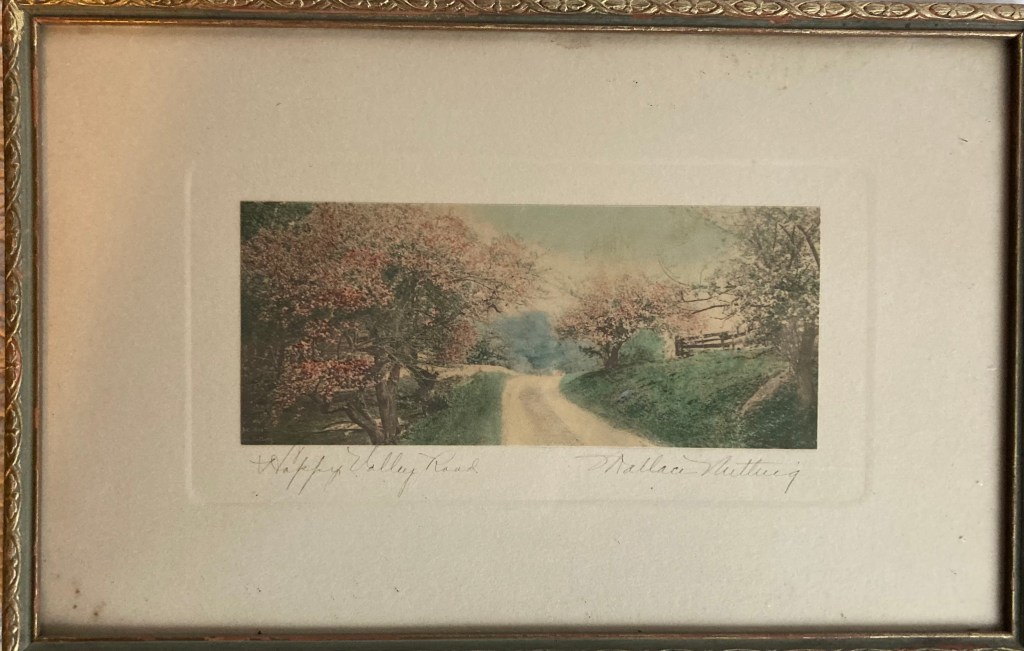
So let’s go back for a moment to the beginning of my collecting. The year is 1970. Soon after I got married, my wife and I bought our first Nutting at a tag sale. Of course, this picture is still part of my collection.
Happy Valley Road, by Wallace Nutting.
My wife and I were bitten by the bug, but we had very little money to spend on pictures. So we were buying pictures “on time” from local dealers and antique shops, making weekly payments. In the 1980s we discovered the Wallace Nutting Auctions that we attended every spring and fall. The dates were saved on our calendar as if they were holidays. From that point forward, our collecting of hand colored photography turned into a frenzy.
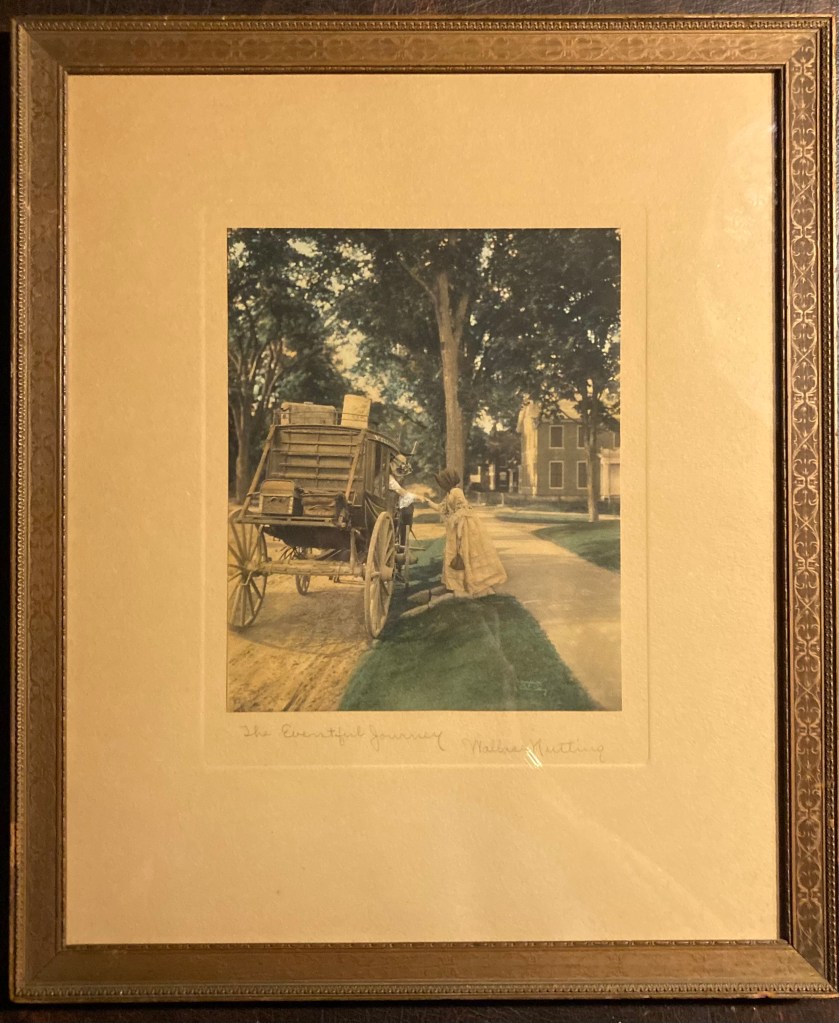
At the first Wallace Nutting auction we went to, we were like kids in a candy shop, not knowing which way to turn first. It may have been at this first auction that one picture in particular caught my eye. An old wooden stagecoach with two woman in colonial garb, one wishing the other An Eventful Journey. I loved it. Great look. Great title. The problem was, a friend of mine was at the auction and he had the same thoughts about that same picture. Not wanting to bid against him, I decided to step aside. My buddy went home with the picture. Oh well maybe next year!
It was that next year, An Eventful Journey was on the auction block. That same day the Nutting picture Rapid Transit, which was almost the same picture, was also up for auction. My thought was that possibly Rapid Transit might draw more attention. Maybe it did, because I won the bidding on An Eventful Journey and it became one of the special pictures my Nutting collection.
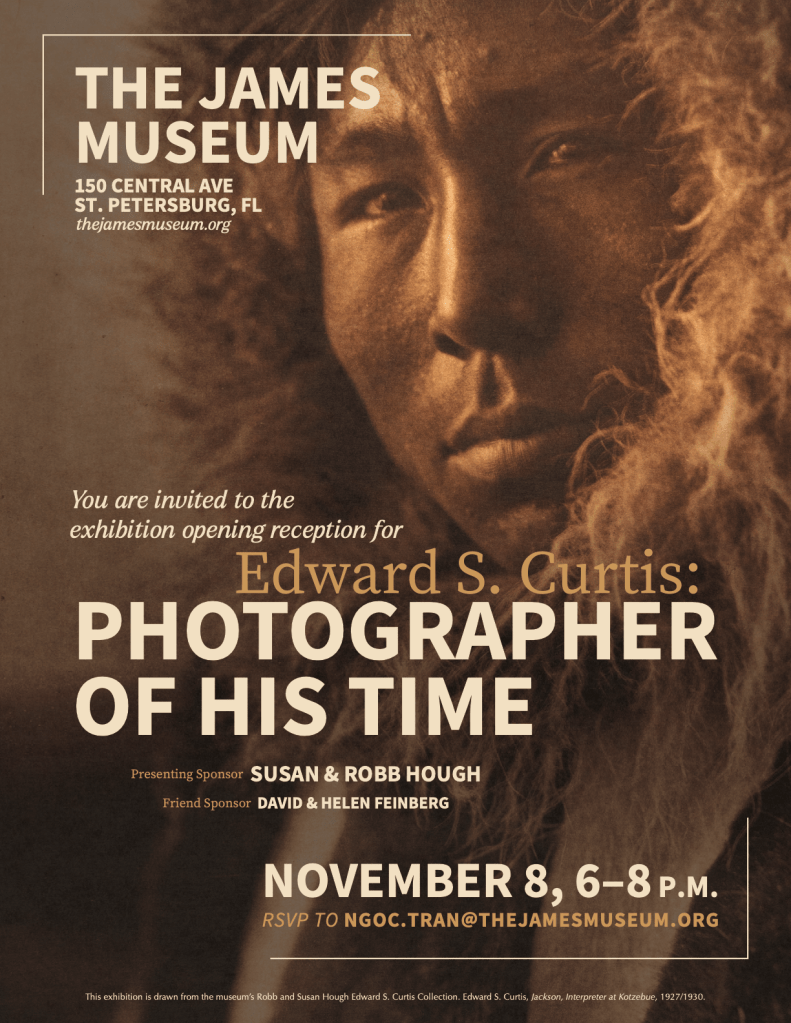
Fast forward to February of this year. The James Museum of Western & Wildlife Art in St. Petersburg Florida, reached out to one of the senior officers of the Wallace Nutting Collectors Club (Hi Jim) looking for a picture that the museum could use in an exhibit they were doing on photographer Edward S. Curtis. This memo was passed on to other officers in the Nutting Club and I was quick to respond. All I knew about Edward Curtis was that he had taken pictures of Native Americans. The only other photographer I knew that took these pictures was David Davidson and I had a collection of them. I was wrong with my assumption about them looking for this type of picture, but I may have opened up a door for future discussions with the museum.
The James Museum was looking for a Wallace Nutting picture that could be used in the exhibit. The exhibition: Edward S Curtis Photographer of his time.
This exhibit just opened on November 8th. It would be tracing the evolution of Curtis’ photography and comparing his work to other artists.
Not knowing exactly what they were looking for, I started sending them suggestions. Their final choice was, An Eventful Journey. So at this moment, my Nutting picture An Eventful Journey is on display in the James Museum in Florida at the Edward S Curtis Exhibition. Quite a journey for a picture Nutting took in Vermont 125 years ago.
An Eventful Journey, by Wallace Nutting
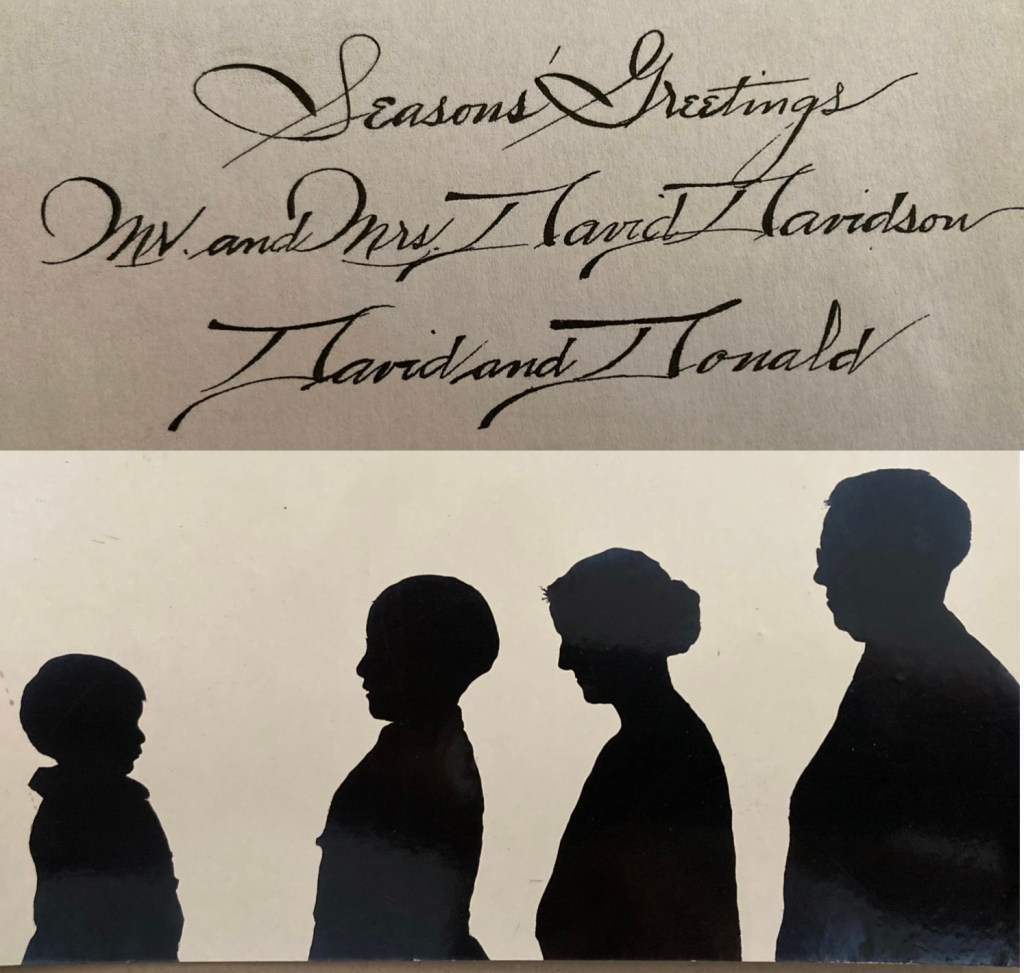
“Seasons Greeting from the Davidsons”……a story for another day.
This is a story that requires us to go back again, to the beginning. We just finished covering the end of Davidsons’ 50 plus years in business. Now we go back to 1900 and follow young David’s commitment to a part time job that he accepted for $0.25 and hour. The job was working for the minister of his church, Wallace Nutting, assisting him at his new endeavor of hand colored photography.
So young David, working part time at Nutting’s photography studio in Cranston R.I., was learning matting, framing, and working in the dark room. But David was anxious to learn the art of photography. I’m sure it didn’t take long before working in the field with Nutting created David’s desire to have and use his own camera.
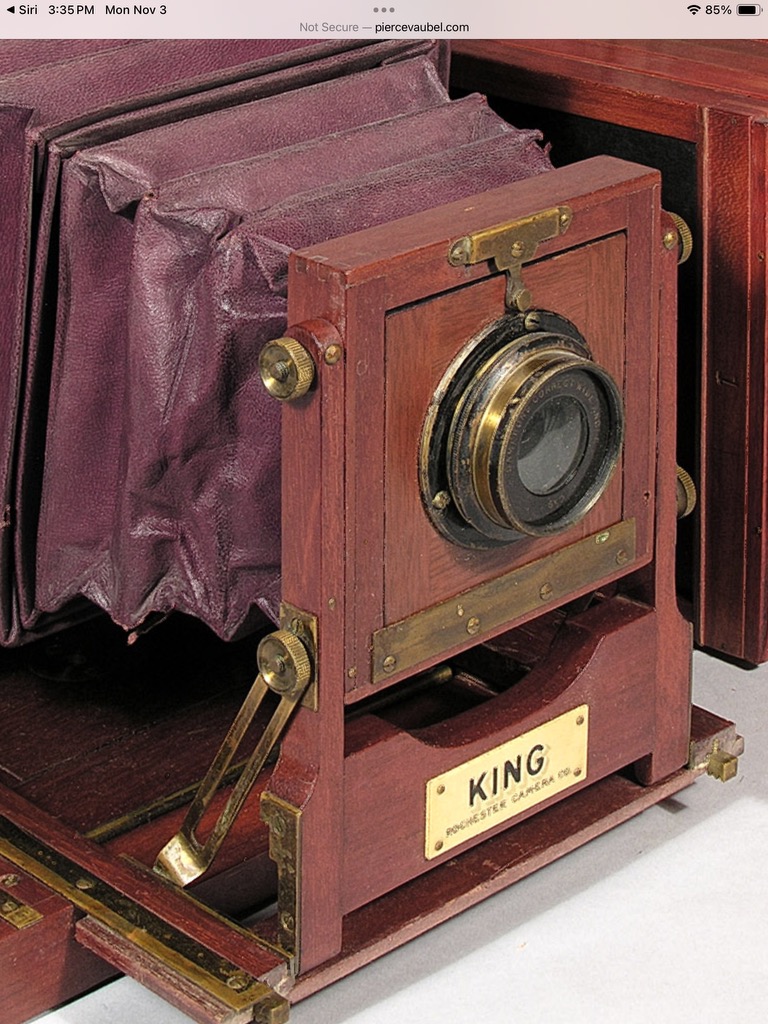
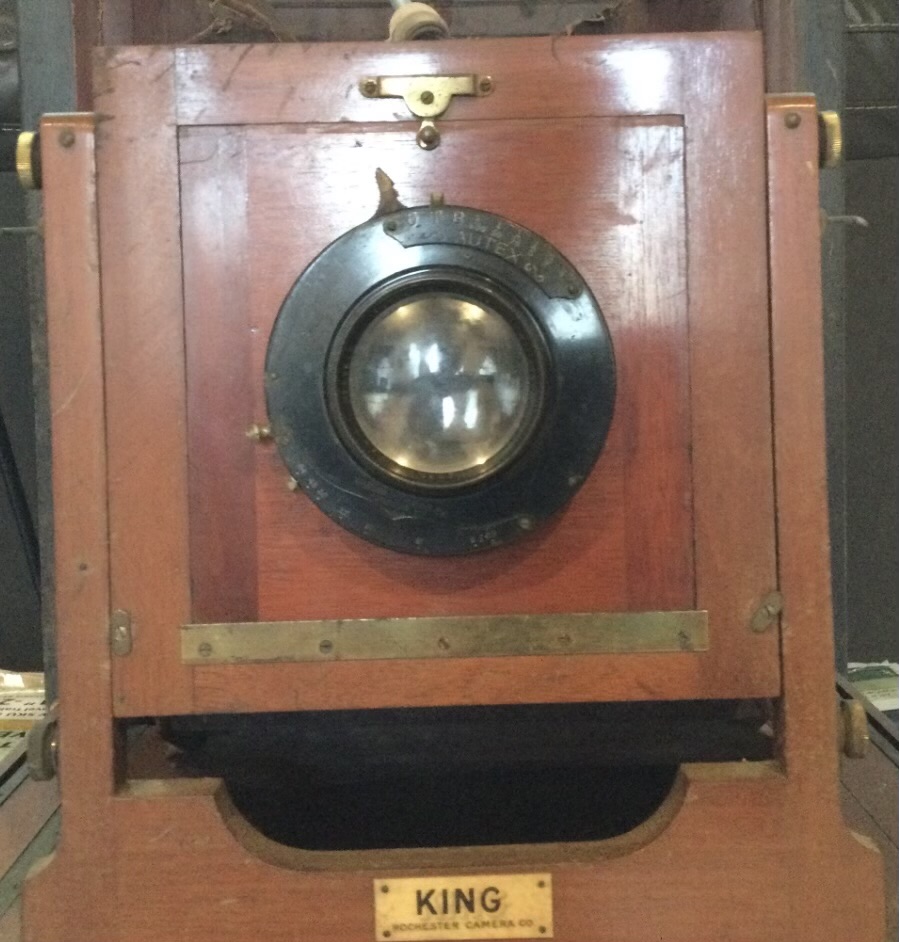
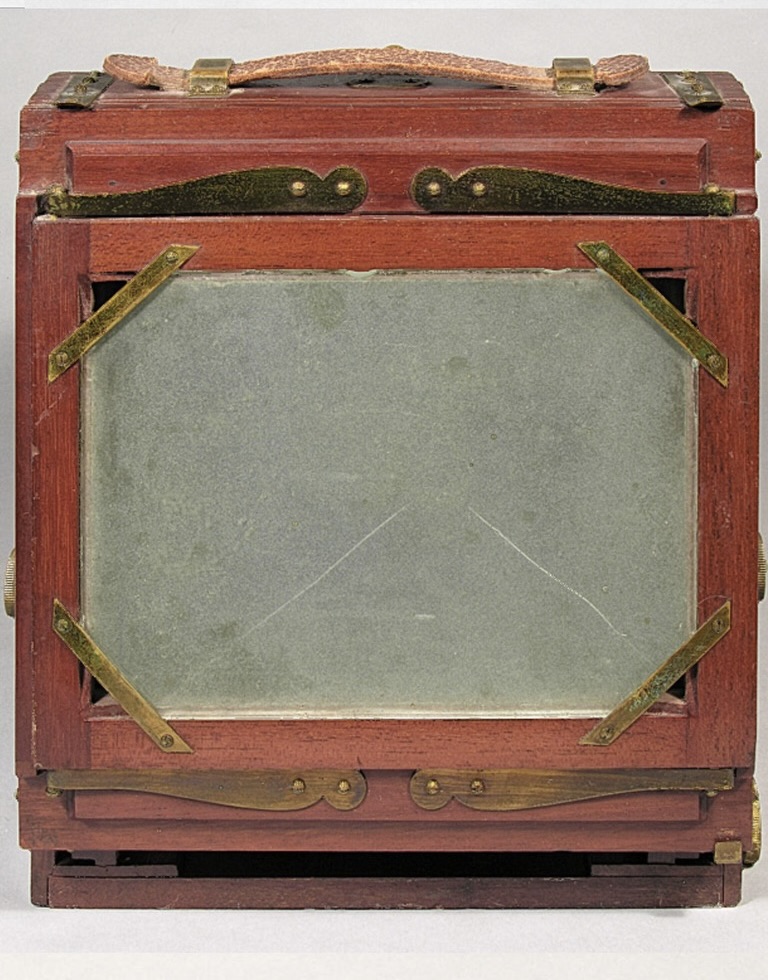
David Davidson had developed the largest paper route in Providence while he was still in grade school. He decided to sell the paper route to create the funds needed to purchase his field camera. The sale of the paper route gave David $100. With $7 more, he purchased his first camera – a King Camera made by Rochester Camera Company.
The $107 that Davidson spent on the King Camera in 1900/1901 would be equal to over $4000 today. The camera is part of the Davidson Family Collection. Thanks to them, I have photos of the camera that started it all!
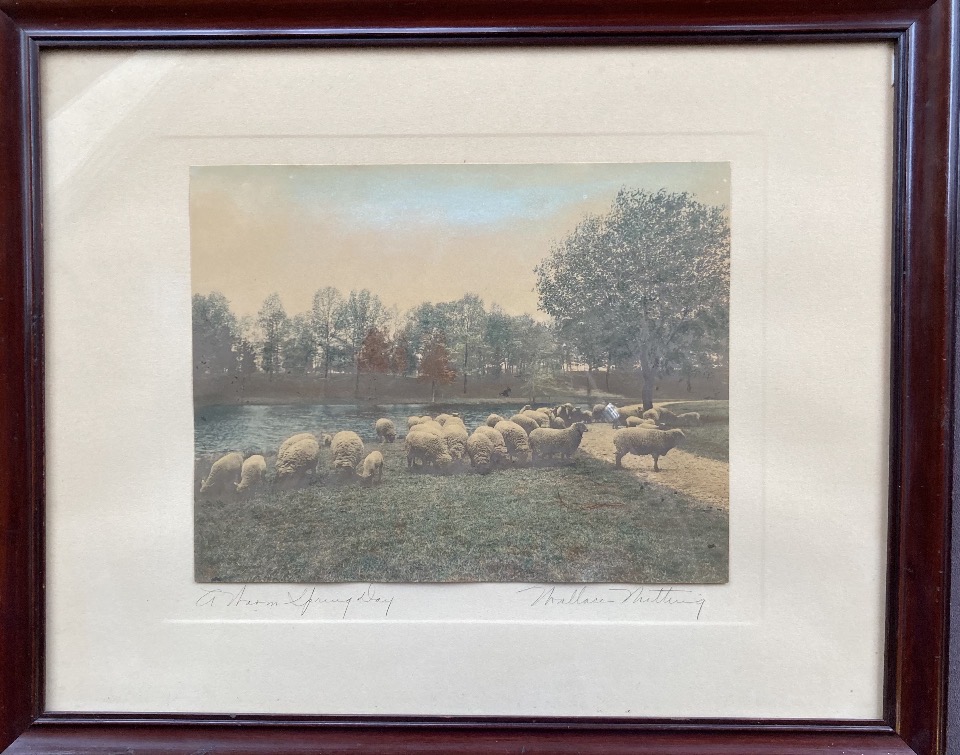
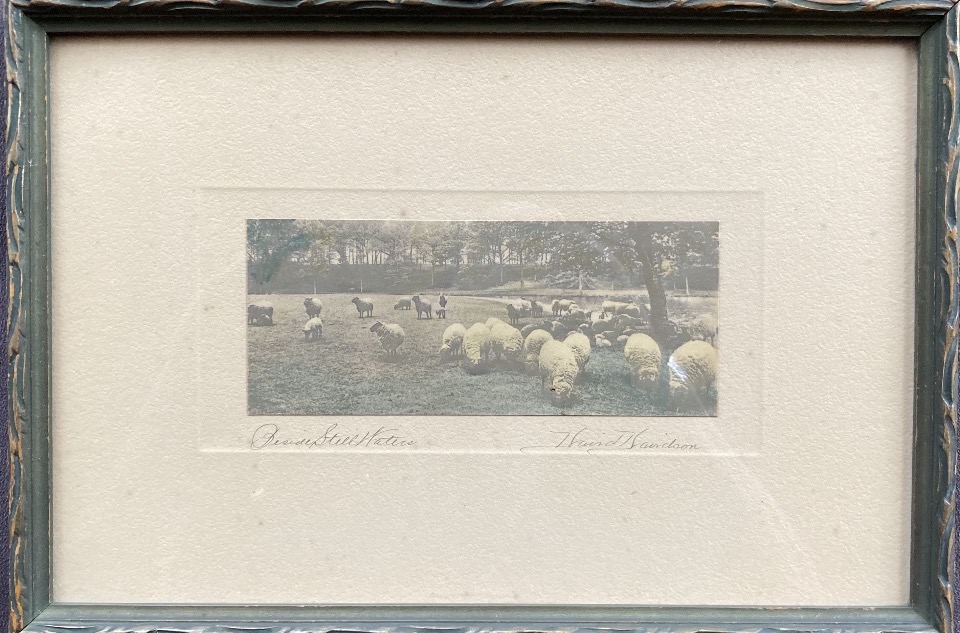
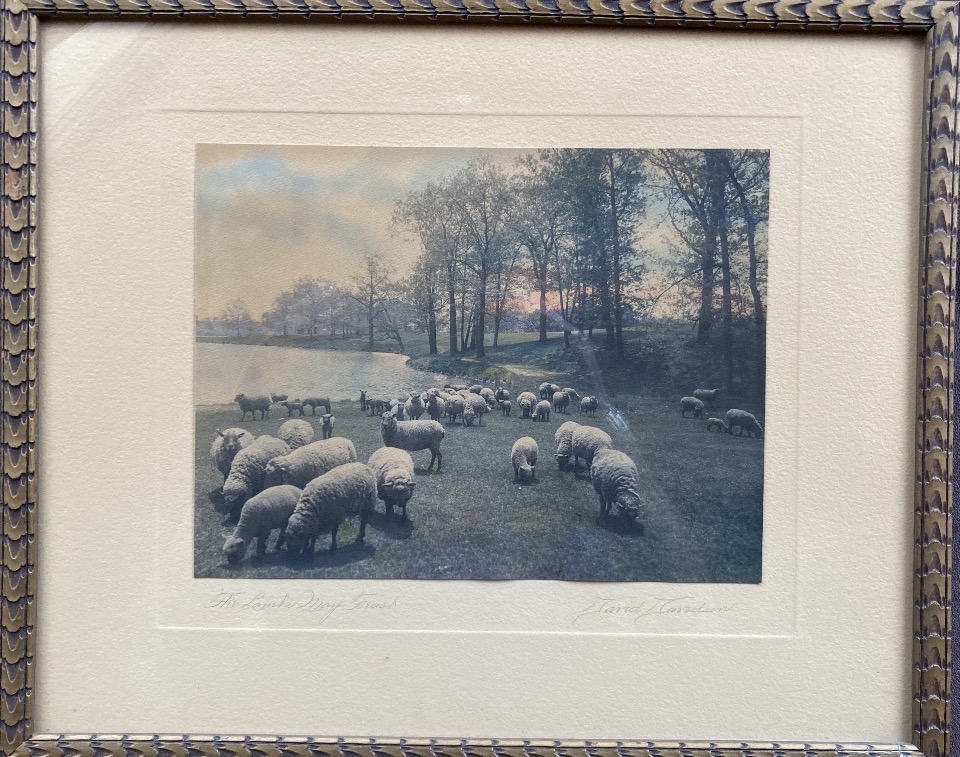
The arena for much of Davidson’s early photography training was Roger Williams Park, as it bordered the Nutting home. The subject of these photographs were the flocks of sheep that wandered the park.
The remarkable similarity between the Wallace Nutting picture, “A Warm Spring Day”,
and Davidson’s “Beside Still Waters” and “The Lambs May Feast”,
Screenshot
is confirmation that those shoulder to shoulder photography sessions took place between Wallace Nutting and young David Davidson in Roger Williams Park, back at the turn of the century.
An ‘Eventful Journey’ and ‘Seasons Greetings from the Davidsons’?
We’ve talked about Davidson facsimile prints and his private commission work, which Davidson mixed in with his hand colored photography when times were good and more so when sales declined.
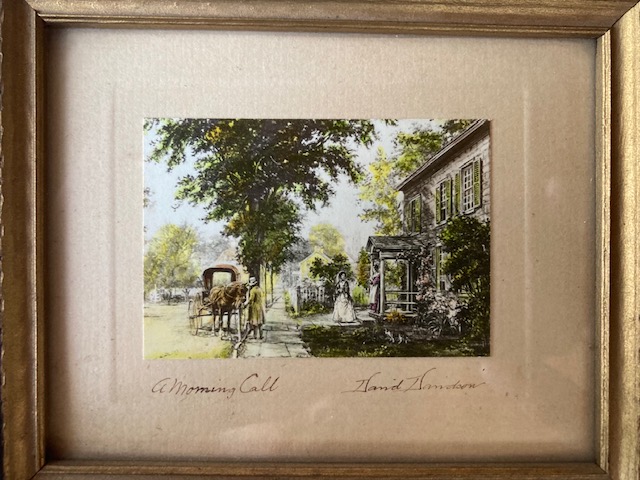
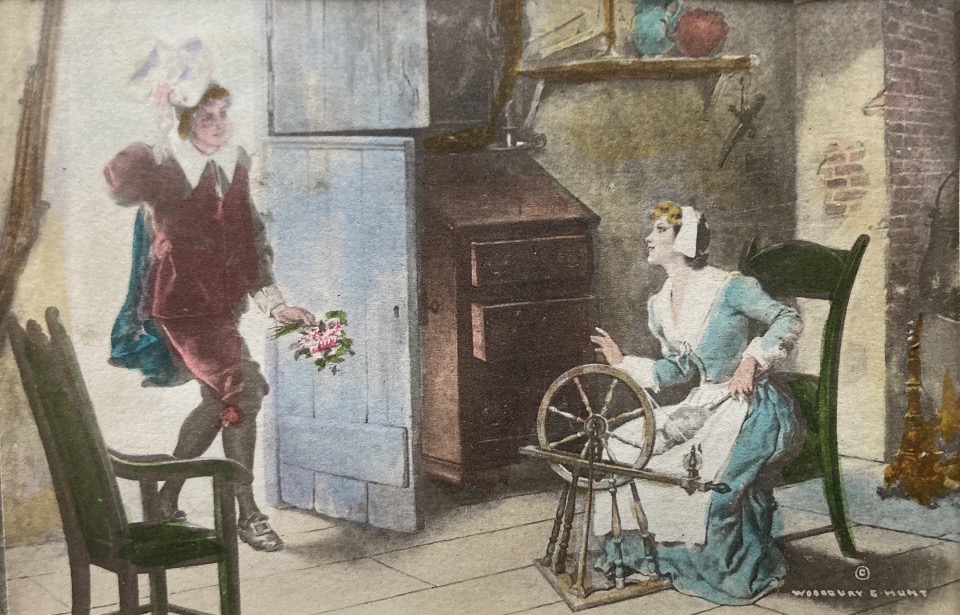
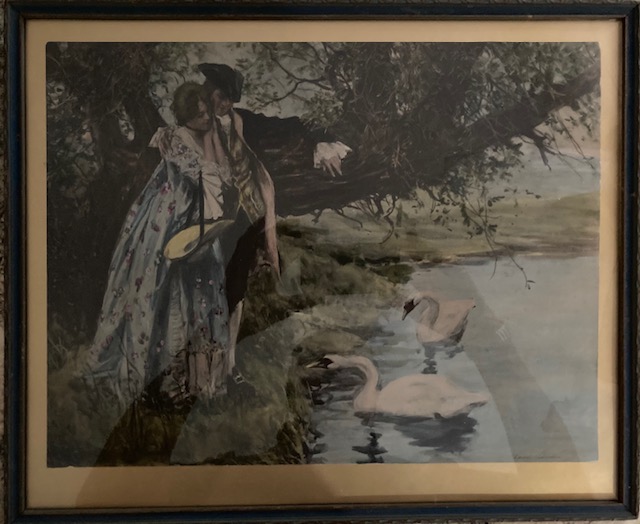
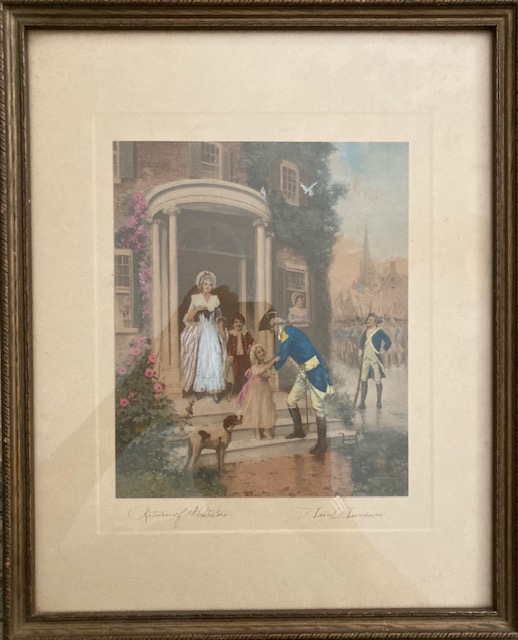
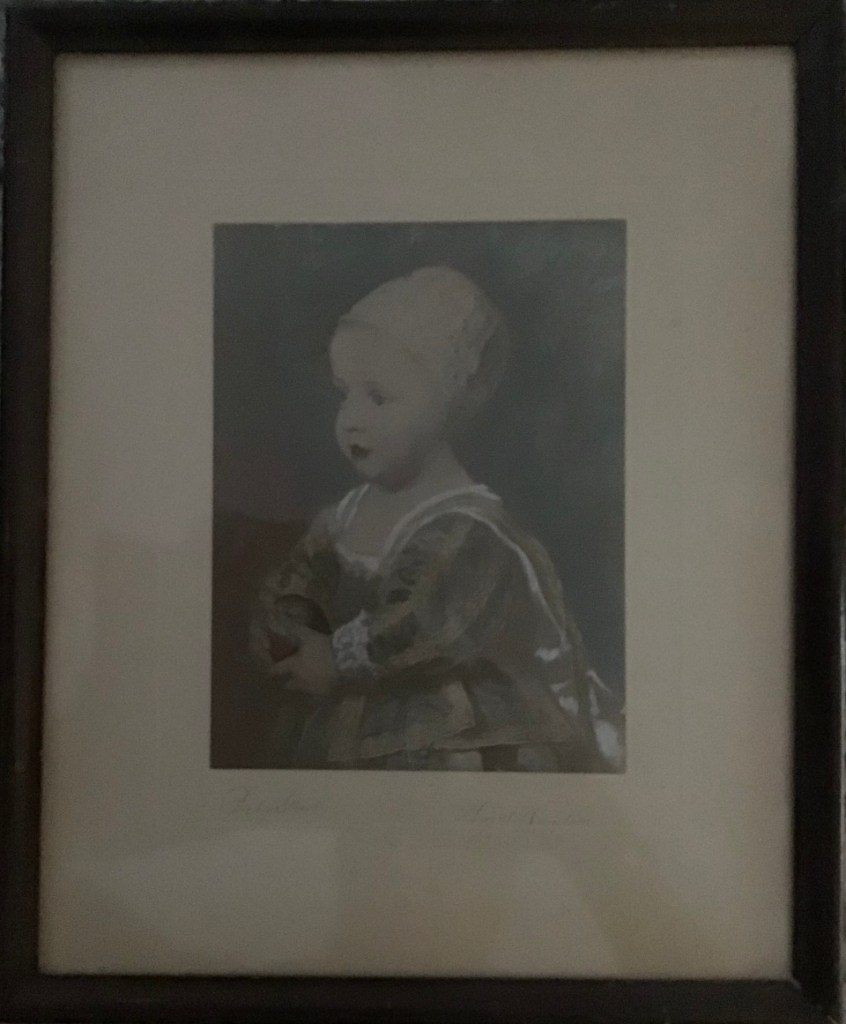
Added to Davidson’s repertoire of alternative pictures 1930’s – 1940’s, were pictures referred to as Colonial Prints. I can remember when one or two of these would show up at the auctions. I looked at them as being on the “rare” side and they didn’t go for much, so I was buying them. Not sure where the name Colonial Prints came from. I don’t think it came from Davidson because they are not prints. They are hand colored photos. And, they are not all colonial style. I think it might have just been a name put to these different pictures, not knowing what else to call them.
This is an image of “A Morning Call”, which was a black and white photo of a colonial drawing. Davidson colorists turned it into a hand colored photo
These images are John Alden and Priscilla. They were also titled “The Mayflower of Plymouth”, the untitled “Couple and Swans” and “Return of the Victors”. These are black and white photos of paintings that were then hand colored. Soon my search for these different Davidsons had me finding this picture, which was done in the same way but not colonial in appearance.
Baby Stewart is Davidsons hand colored version of the 15th century painting by Sir Anthony Van Dyke with the same title.
The process of creating these Colonial Prints was much like Davidsons private commissions work in that it didn’t require the involved and lengthy procedure of a photo shoot. Just Davidson and his camera. Far less expensive to create. Another one of Davidsons “irons in the fire” during tough economic times.
By 1950 hand colored photography sales that had begun to slow as early as the 30’s now slowed to a trickle. Years of Davidson compensating and always adding another iron to the fire to keep up with declining sales, were coming to an end.
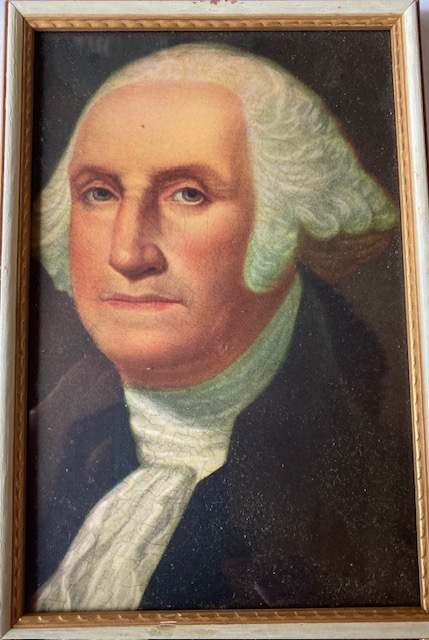
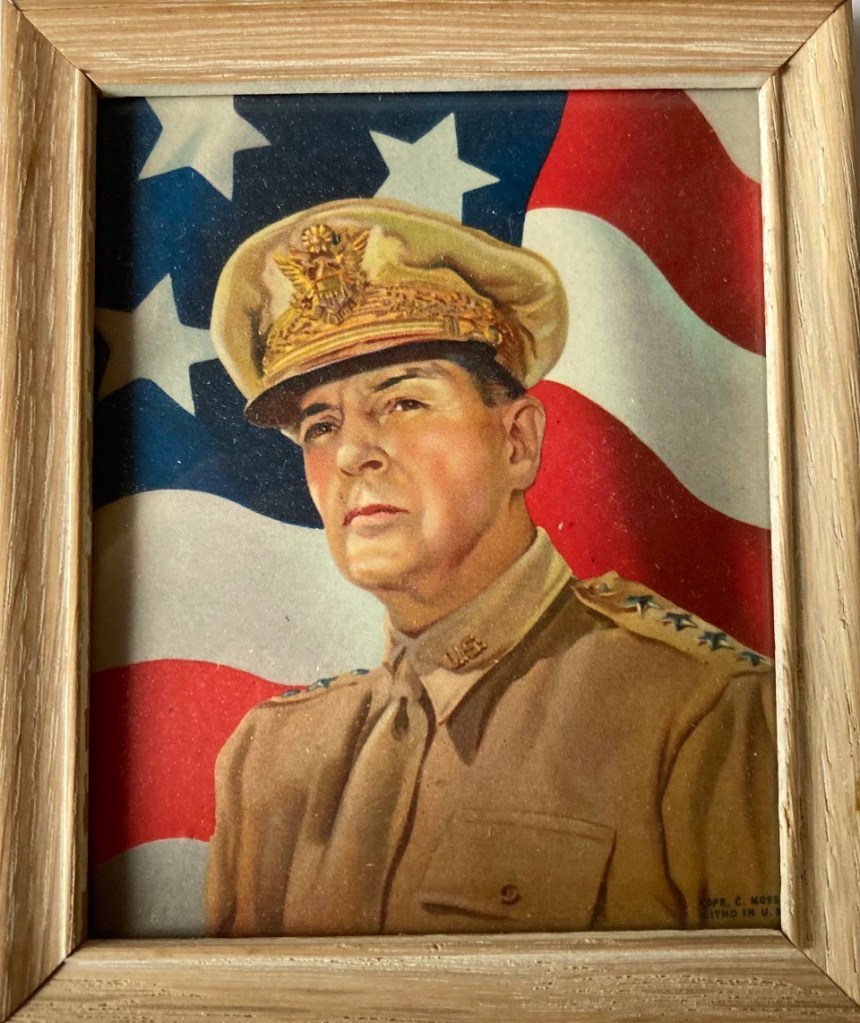
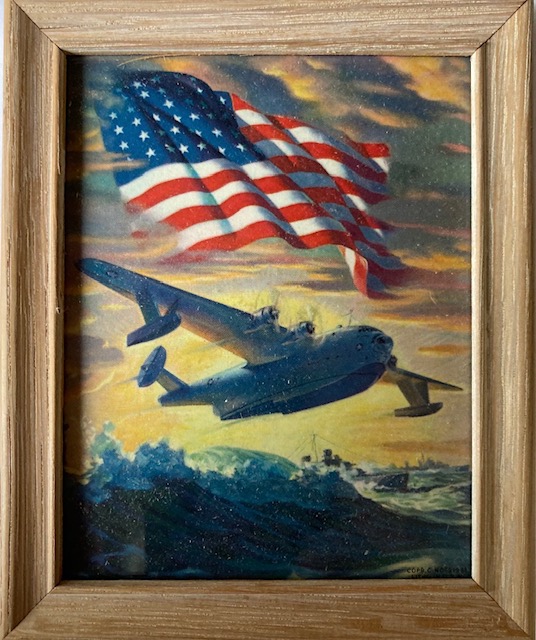
Davidson Studios began selling a series of patriotic colored prints. George Washington, General Douglas MacArthur, and WWII patriotic scenes were some of the many.
Screenshot
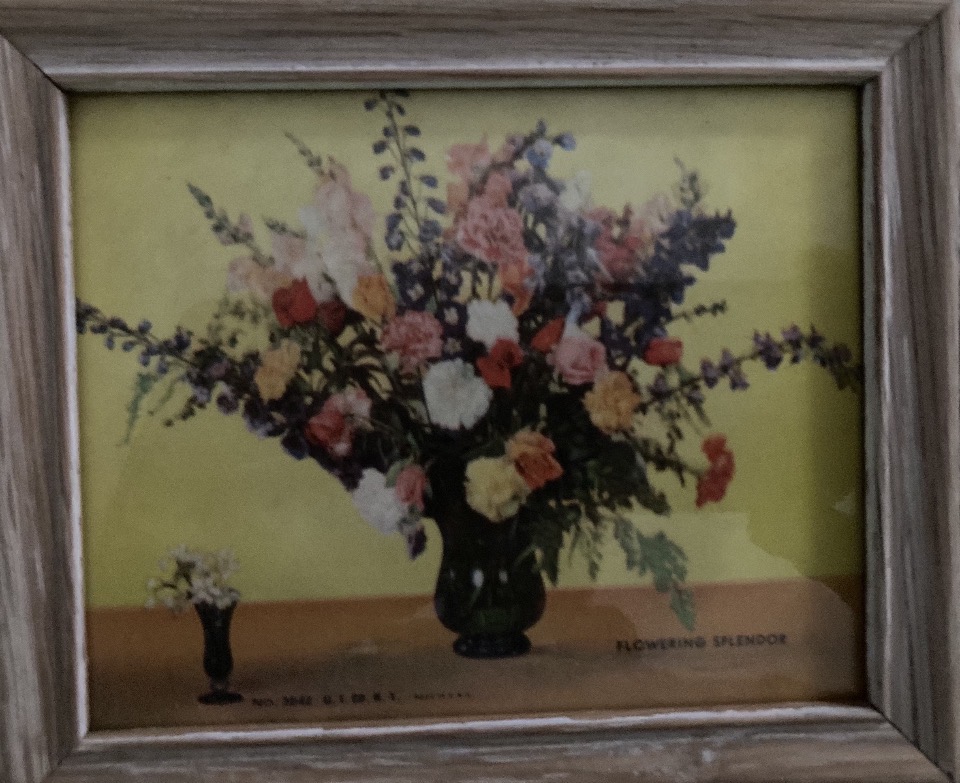
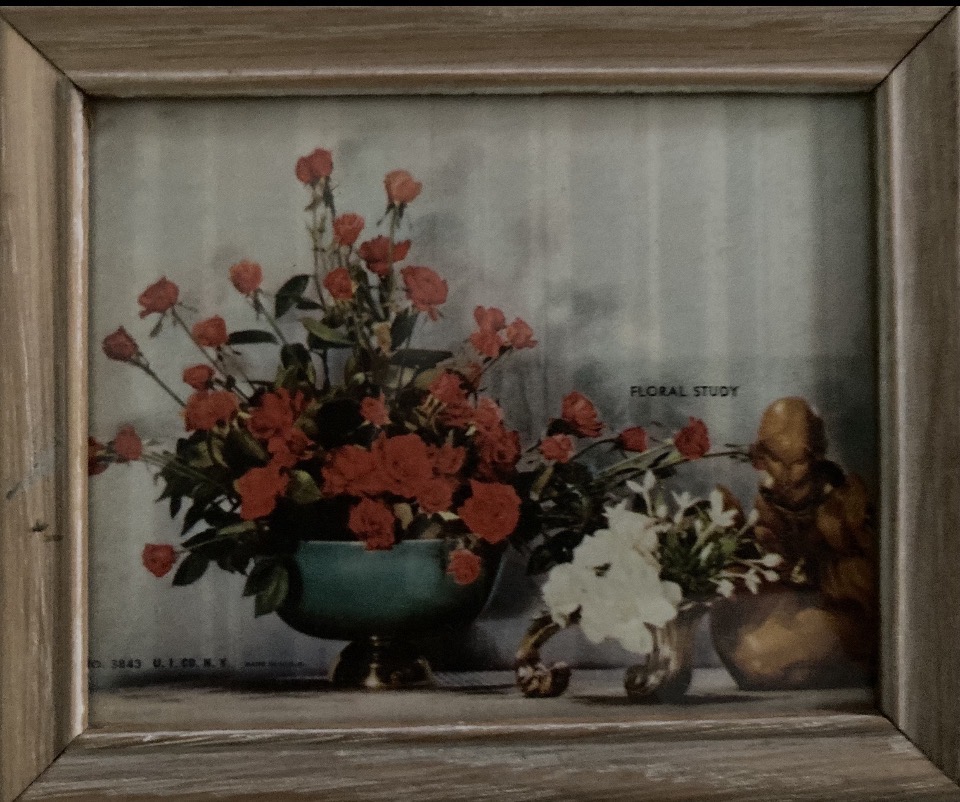
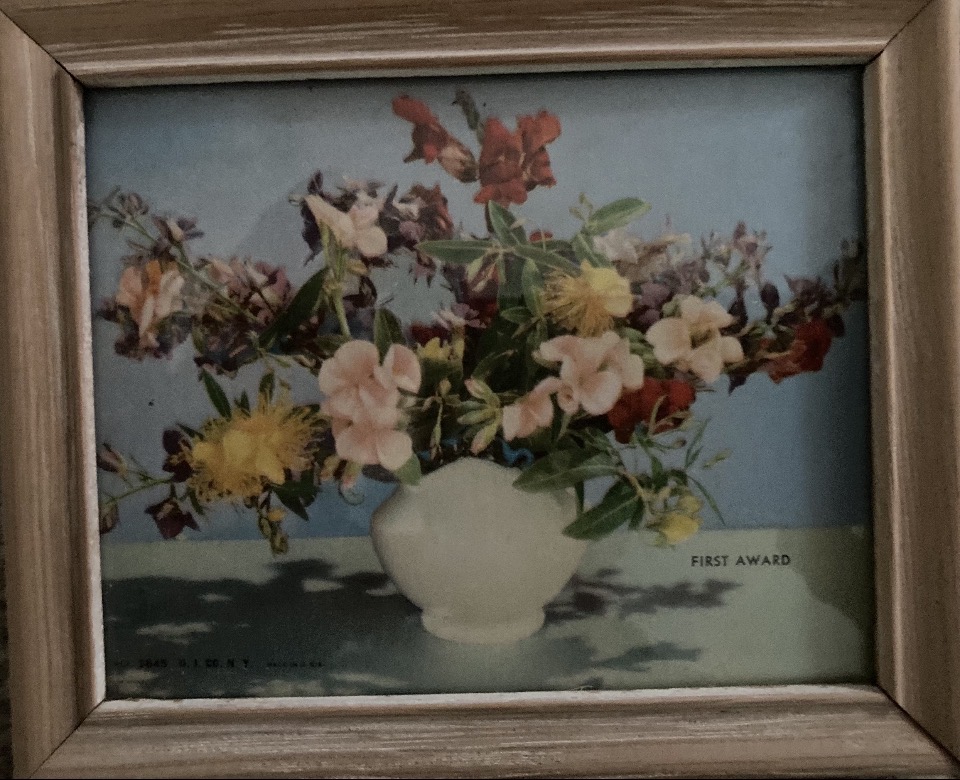
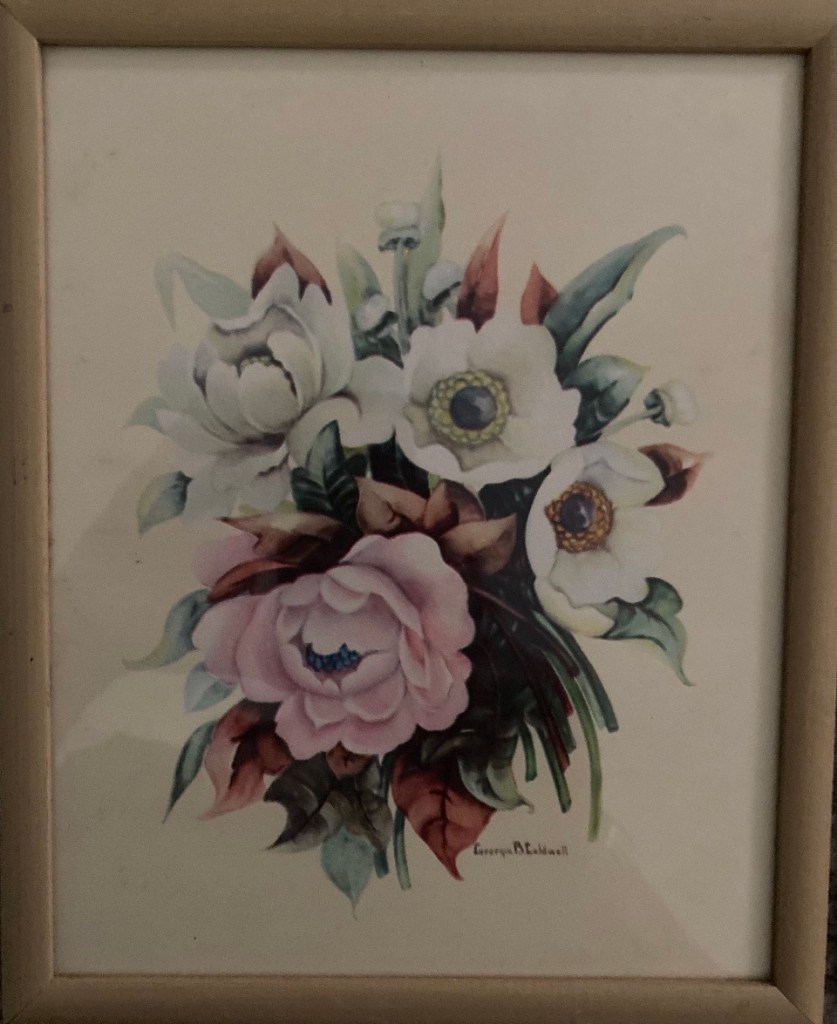
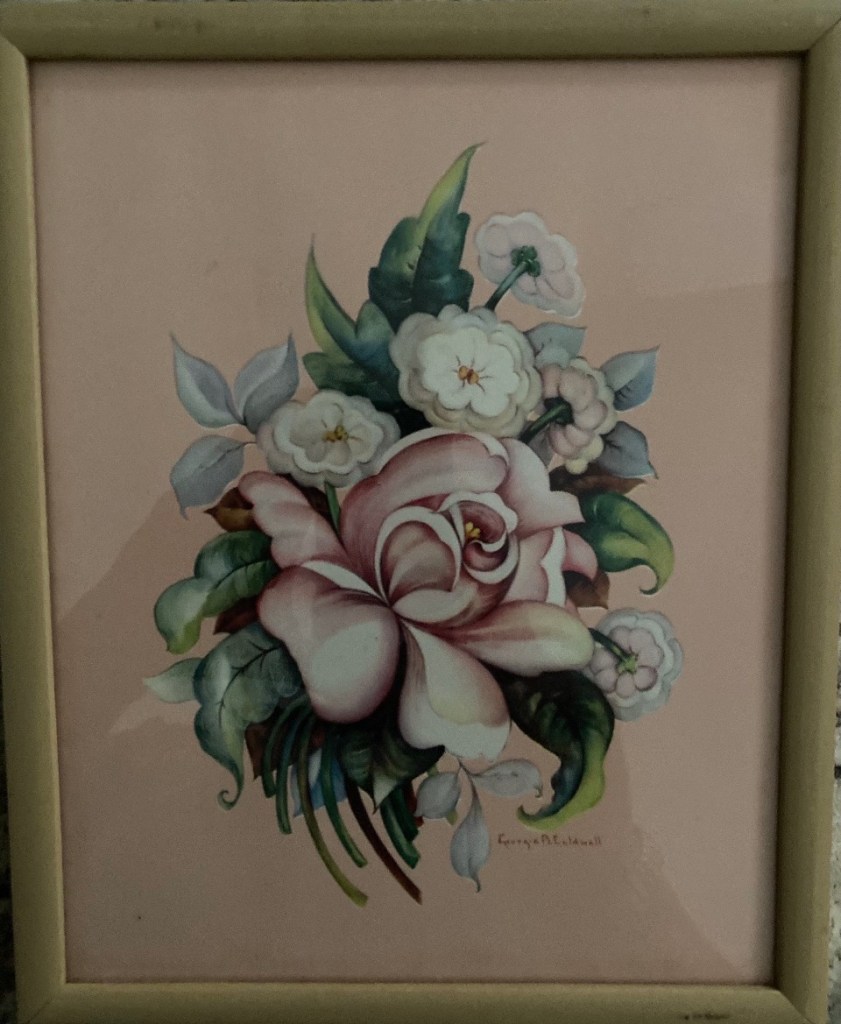
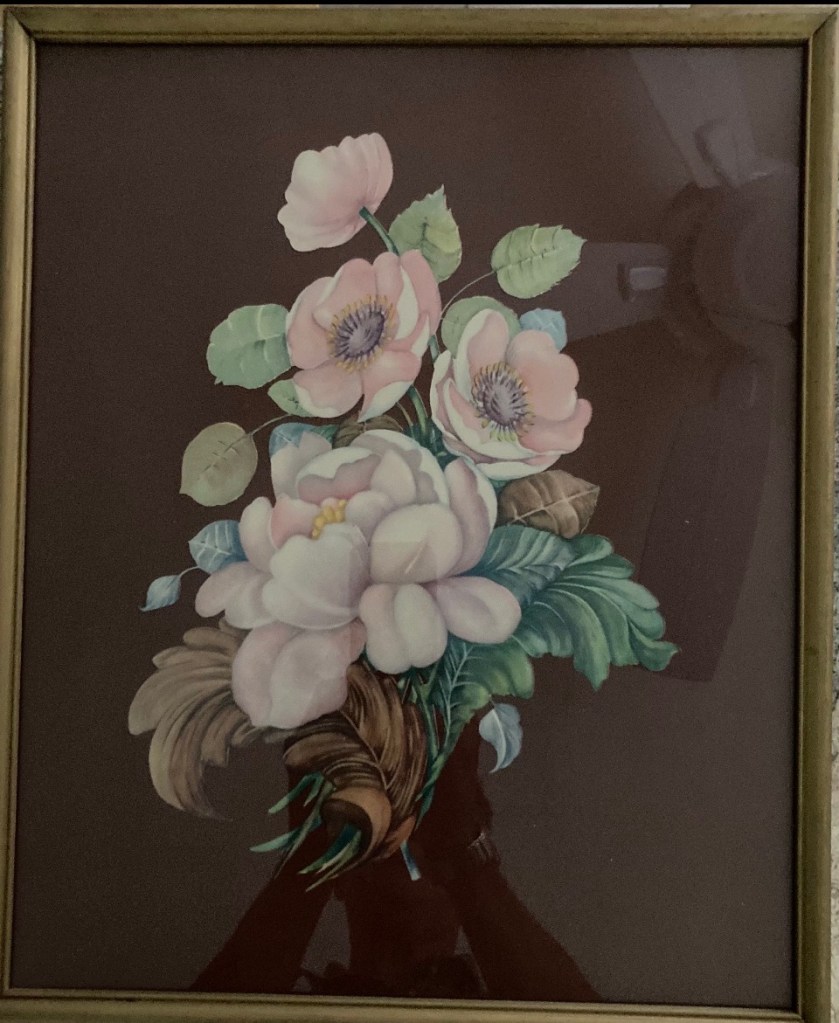
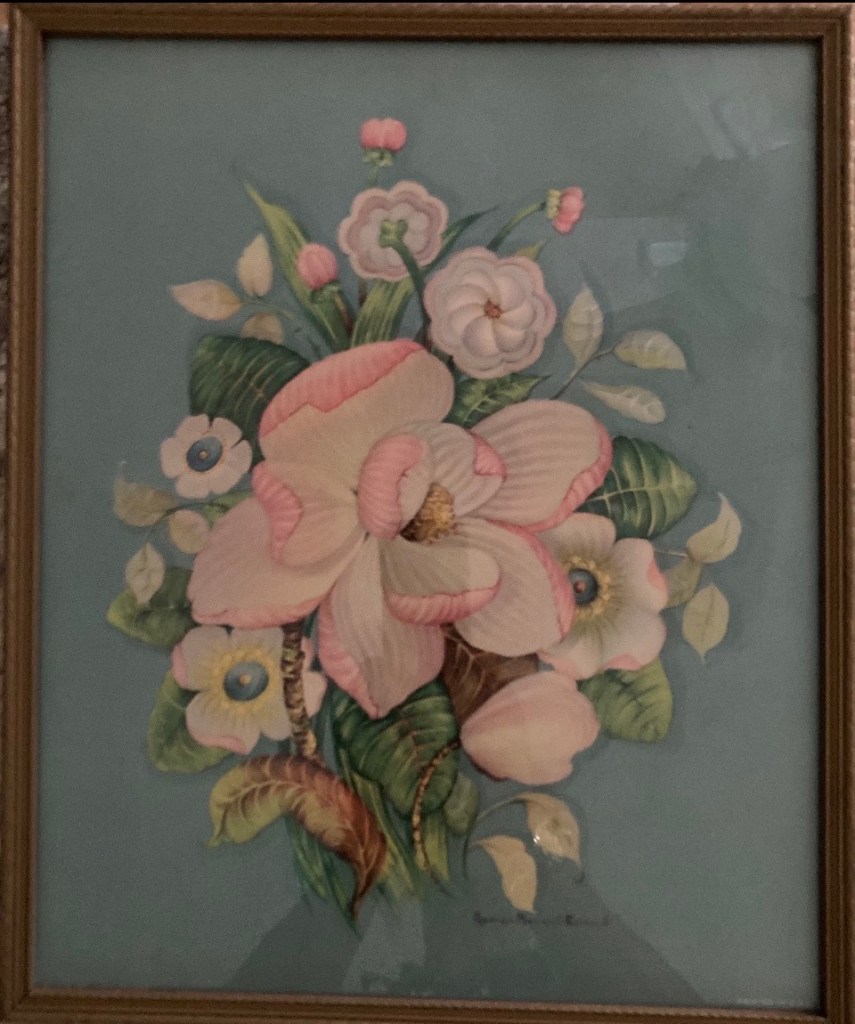
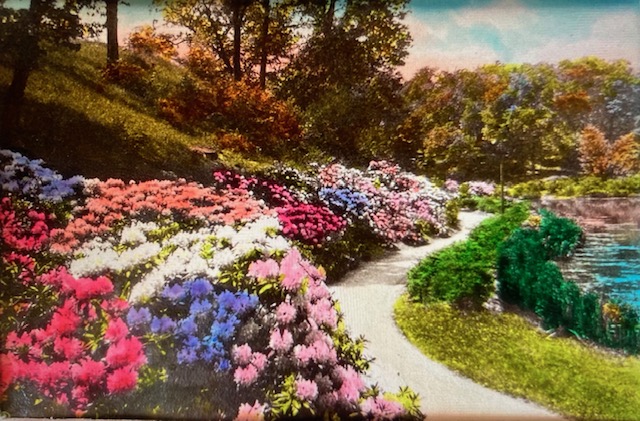
Probably the last alternative pictures sold by David Davidson Studios were a series of floral prints.
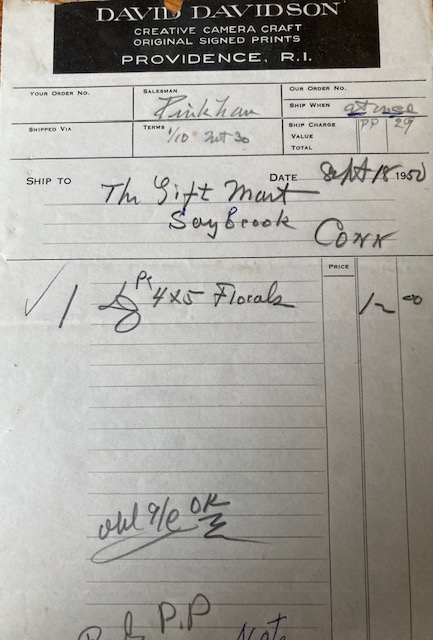
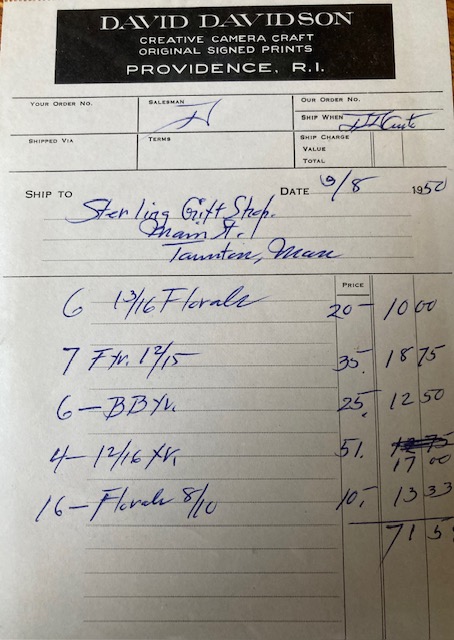
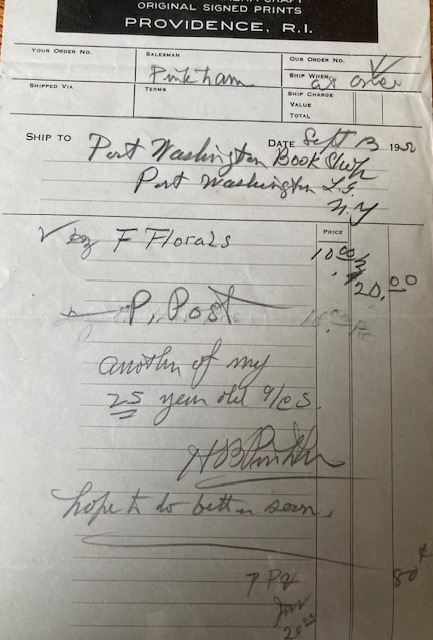
These florals started to appear on many of the sales receipts that I have, beginning in 1950.
Facsimile prints, private commissions, colonial prints, patriotic prints and florals. The many irons in the fire that helped David Davidson Studios through the declining years of the hand colored photography movement. In 1955 the Davidson family finally closed the doors on their studio at 57 Whitmarsh Street, Providence, RI.
Screenshot
The many topics and unique pictures to follow that were part of the half century of David Davidson Studios?
Davidson Facsimile Prints, that we had talked about in Part 1, were most likely the first alternative pictures he sold to compensate for times of declining sales. Wallace Nutting too made the same adjustments, selling his Processed Prints. These were also of some of his more popular hand-colored photos. But you have to realize, Davidsons’ business was very small in comparison to Nuttings. Davidsons payroll probably never topped 15 people. Nutting employed 220. So what has always been the case for someone running a small business? You survive by having “many irons in the fire”.
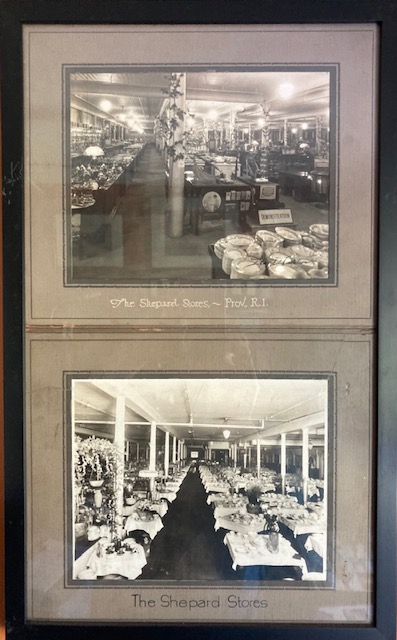
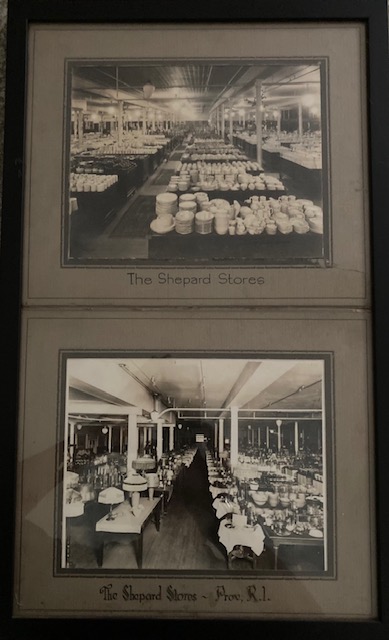
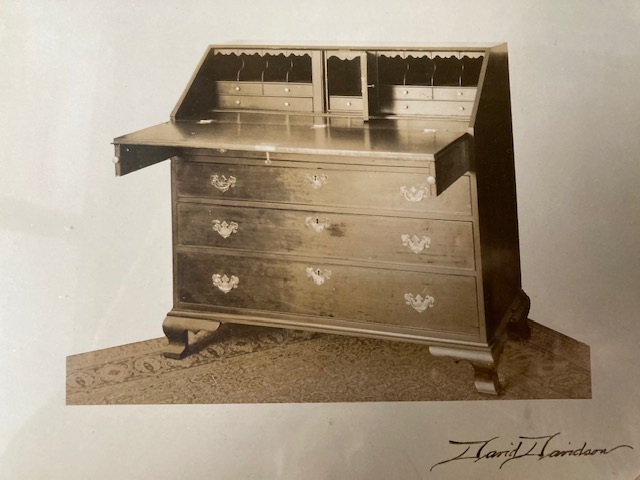
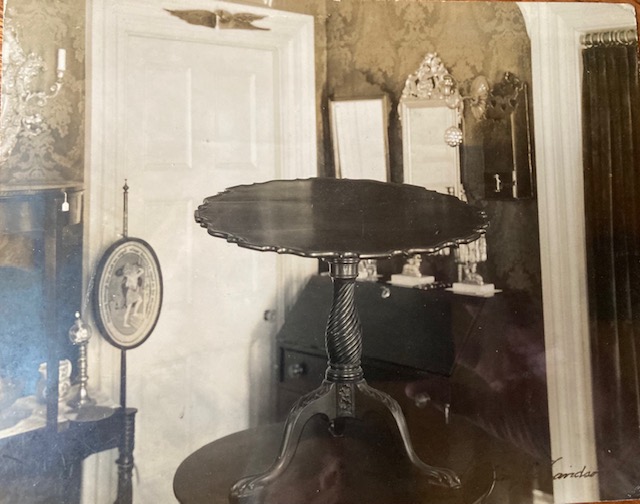
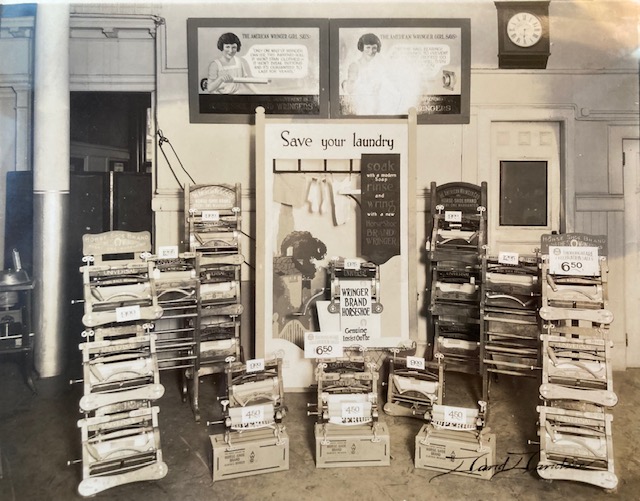
Private Commissions were always one of Davidsons many “irons”. Taking advertising photos for a business were quicker and easier than setting up a photo shoot, plus you got paid right away! Here are some of the private commission photos I’ve collected over the years:
These 4 photos are advertising pictures Davidson took for The Shepherd Store in Providence R.I. A Story for another day, but The Shepherds Store/Davidson relationship became a larger part of Davidsons business in New England.
These 2 pictures of furniture were most likely taken as part of a homeowners insurance policy. The back of these photos are marked with index numbers 967 and 971. So, they are part of the same commissions.
This is a simple advertising photo Davidson took for Wringer Brand Horseshoe Clothes Wringer Co. (can you imagine that this was once state of the art clothes drying?)
As far back as you can go in the David Davidson numerical index, missing numbers were a sign of pictures taken that were not sent out for copywriting. This was private commission work. Either in the form of advertising or pictures taken of private homes, as I mentioned in the first blog post. In the later years of David Davidson Studios, fewer index numbers were assigned to hand-colored photos and more were assigned to private commissions.
Facsimile prints and private commission work! The years of declining sales proved to be a challenge for Davidson. But possibly one of the advantages of being a small business was the ability to change and adapt. To add another iron to the fire.
Colonial Prints and Florals? A story for another day….
There has been much discussion about the beginning of the hand colored photography movement and David Davidsons part in it. Little has been discussed about the end of that era. What was David Davidson Studios involved in during the 1940’s? These were the declining years of hand colored photography.
The Arts and Crafts movement had been the main influence at the turn of the century. It was a simpler time, led by furniture designer Gustov Stickley and the hand colored photography movement led by Wallace Nutting, David Davidson, Charles Sawyer and Fred Thompson. These photographers’ pictures of meandering dirt roads lined with stone walls and apple trees, captured that sentimental longing for the past that our country yearned for in the 1940’s. But, nothing ever stays the same. Our world was headed towards paved highways, more and faster cars, supermarkets, and the Baby Boomer Generation. So that era, reflecting a simpler time, that survived 2 world wars, the depression, the dust bowl that decimated the heart of our country and Polio, fell simply to progress and one small invention; Color Photography.
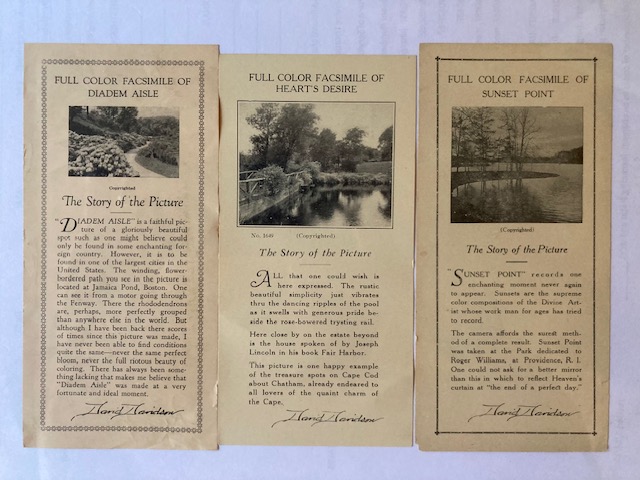
David Davidson Studio’s decline started in the 1940’s. To be more accurate, probably at the end of WWII. Davidson did his best to adjust. He called them Facsimile Prints. These were machine produced, colored prints that Davidson marketed of some of his more popular exterior hand colored photos.
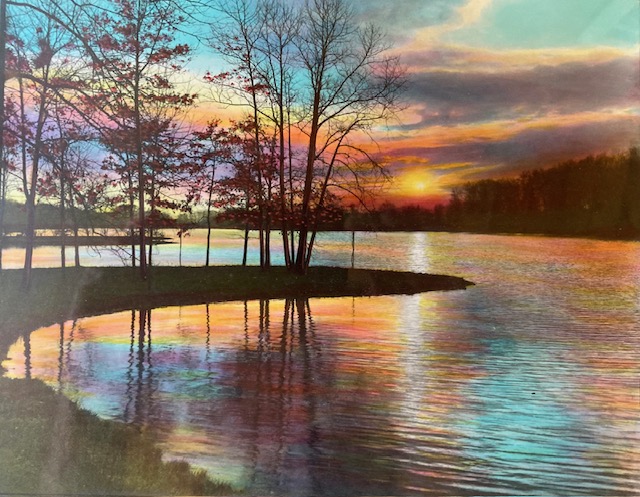
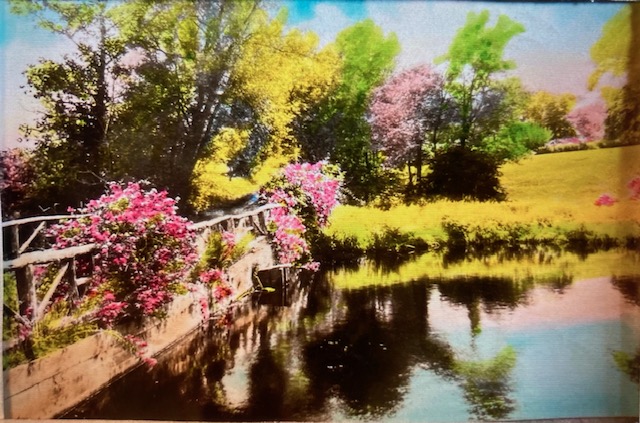
Diadem Aisle, Hearts Desire, Sunset Point were the most popular Facsimile prints.
Full Color Facsimile labels were put on the back of these prints to distinguish them from the hand colored photos.
This is the other half of one of the opening comments of this blog…
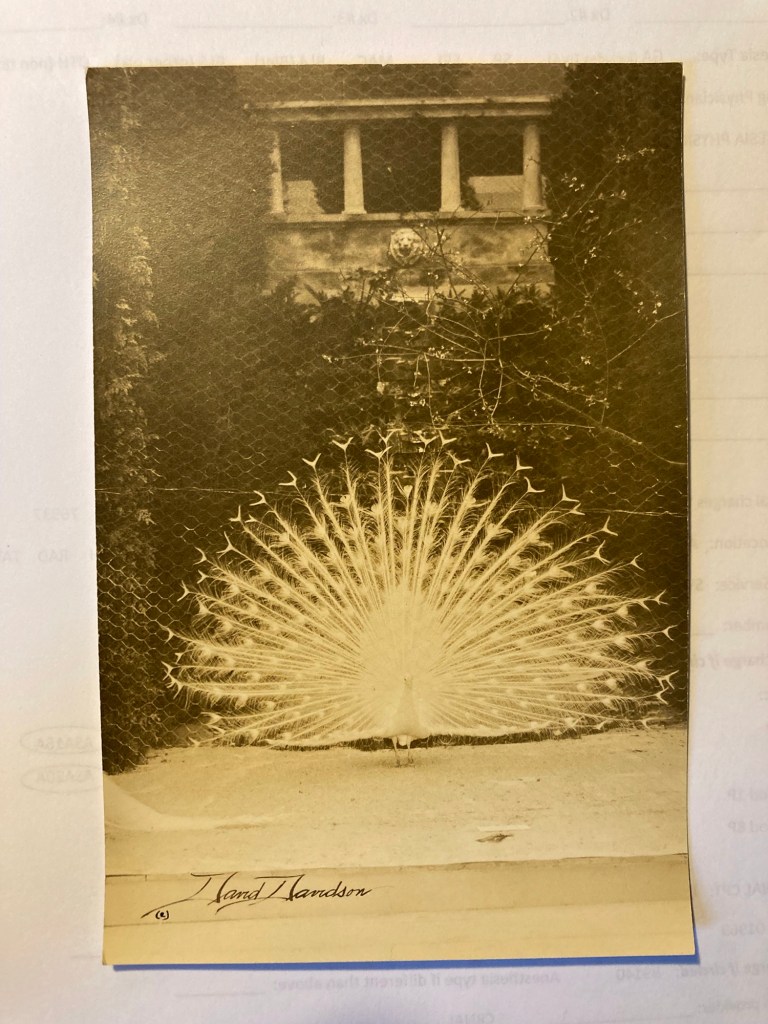
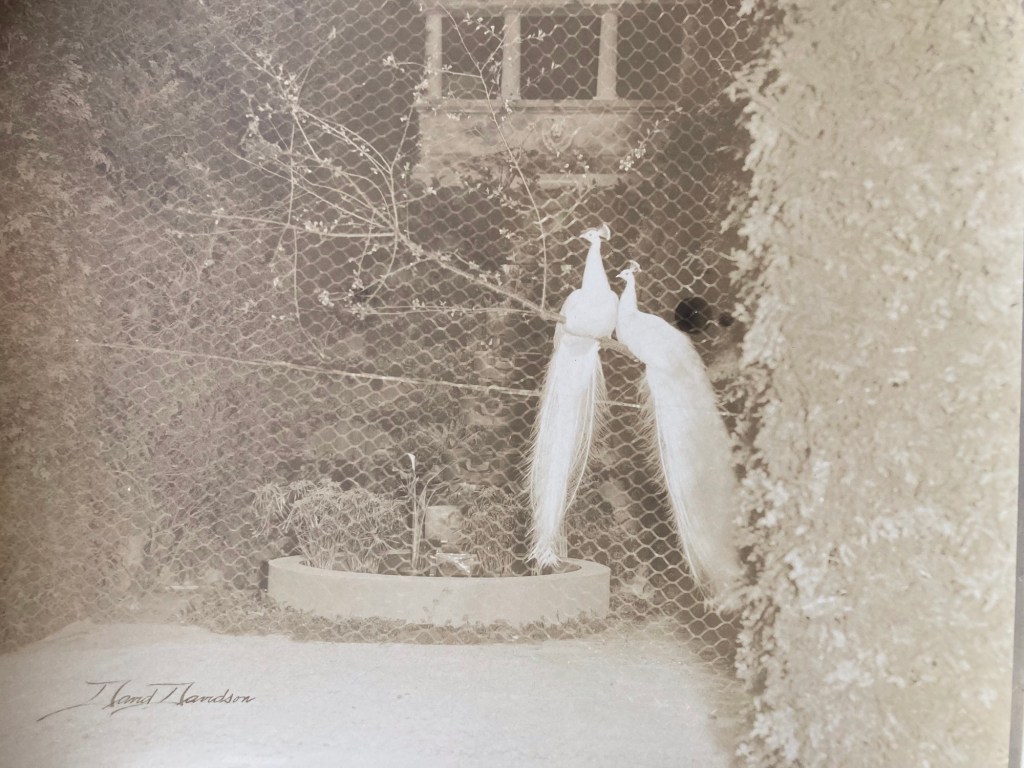
So we have to go way back to one of the first Wallace Nutting auctions that my wife and I went to. I was just starting to get involved with Davidson pictures, and there at the preview was a Davidson picture of a Peacock! Well, I was the high bidder and I do remember it went for more than I was comfortable spending. Like I said, rare animals brought high prices.
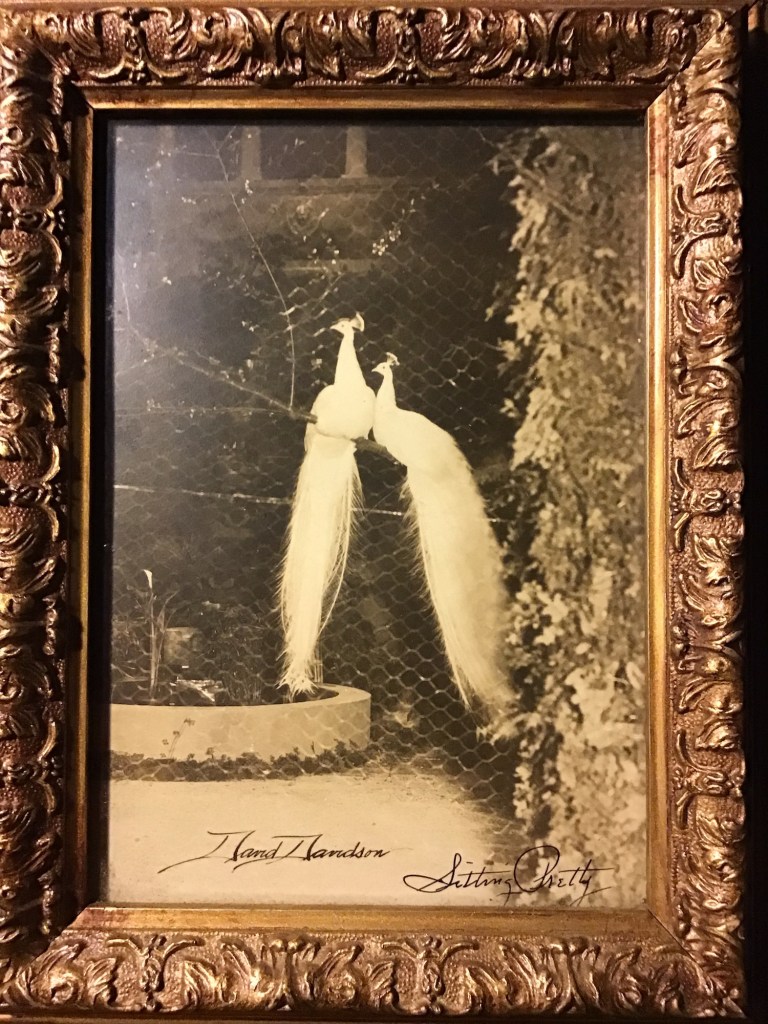
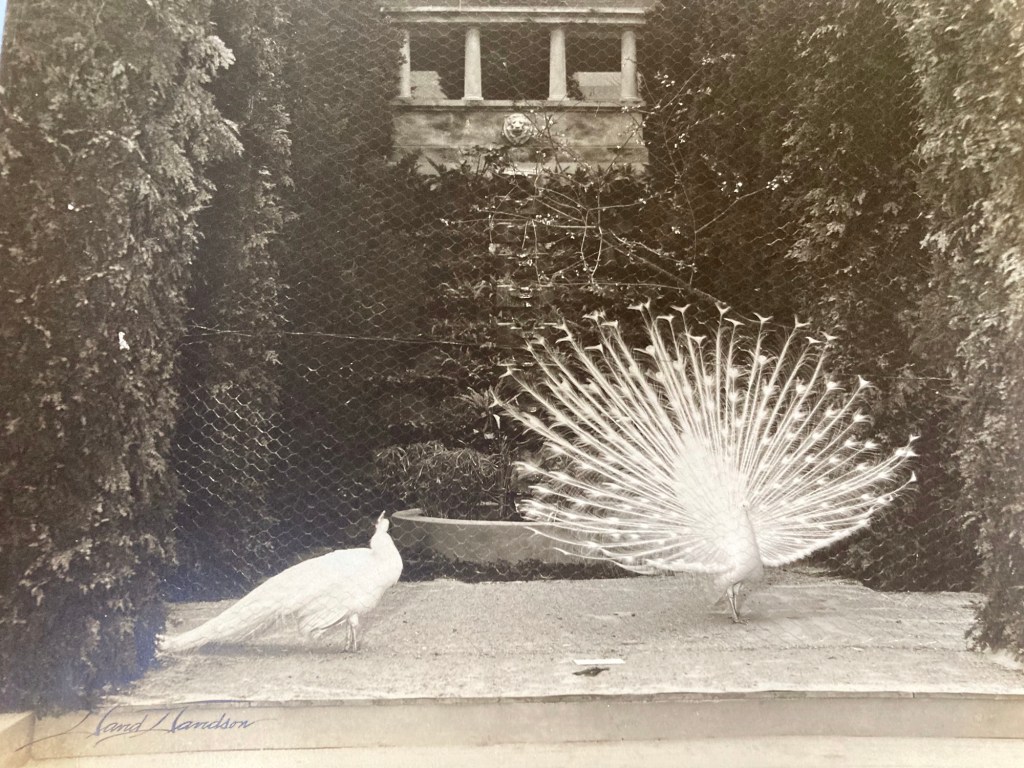
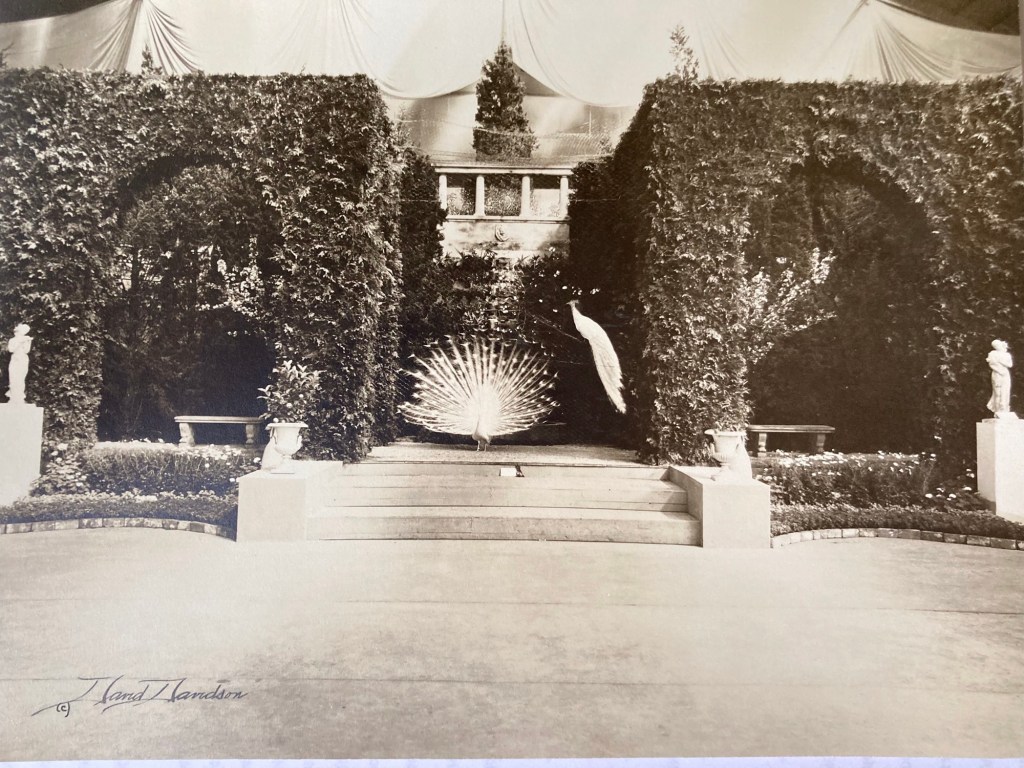
“Sitting Pretty” was the title, and it was done in sepia tone. Later that day and that night at dinner the conversation over the picture continued. Where did Davidson take that picture? A zoo? The zoo at Roger Williams park? Which made sense considering the parks connection to Davidson. It was brought up that it just might have been someone who had a Peacock in a pen in their back yard. Was the answer that uninteresting? It wasn’t. But it was years before I had the answer.
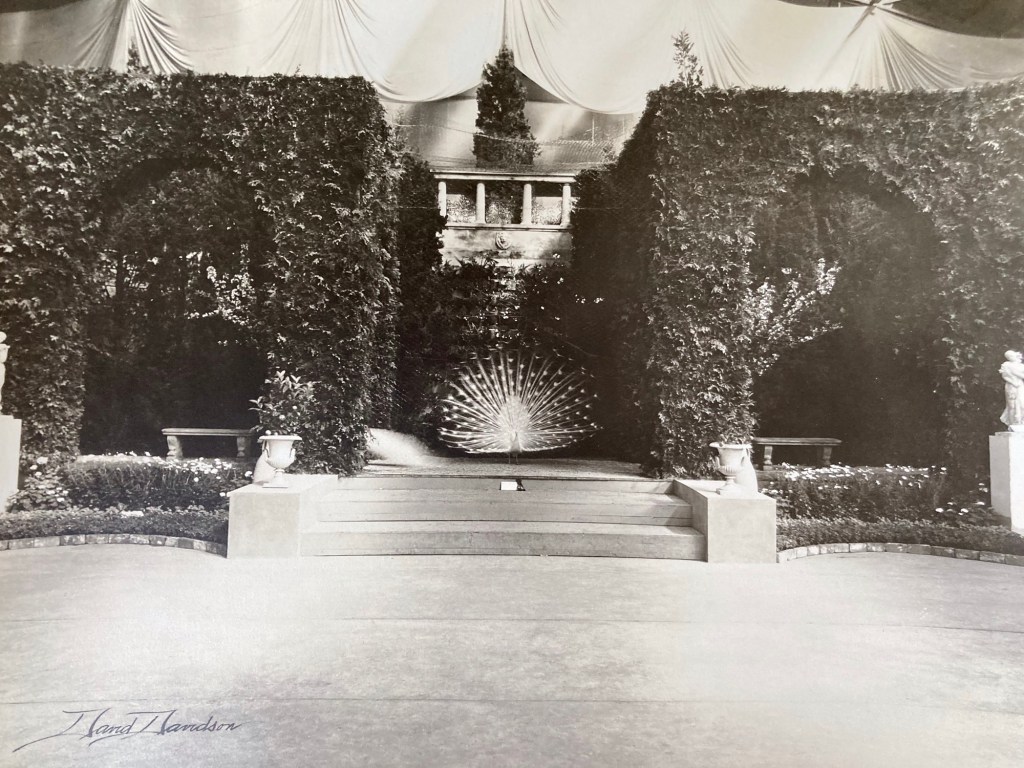
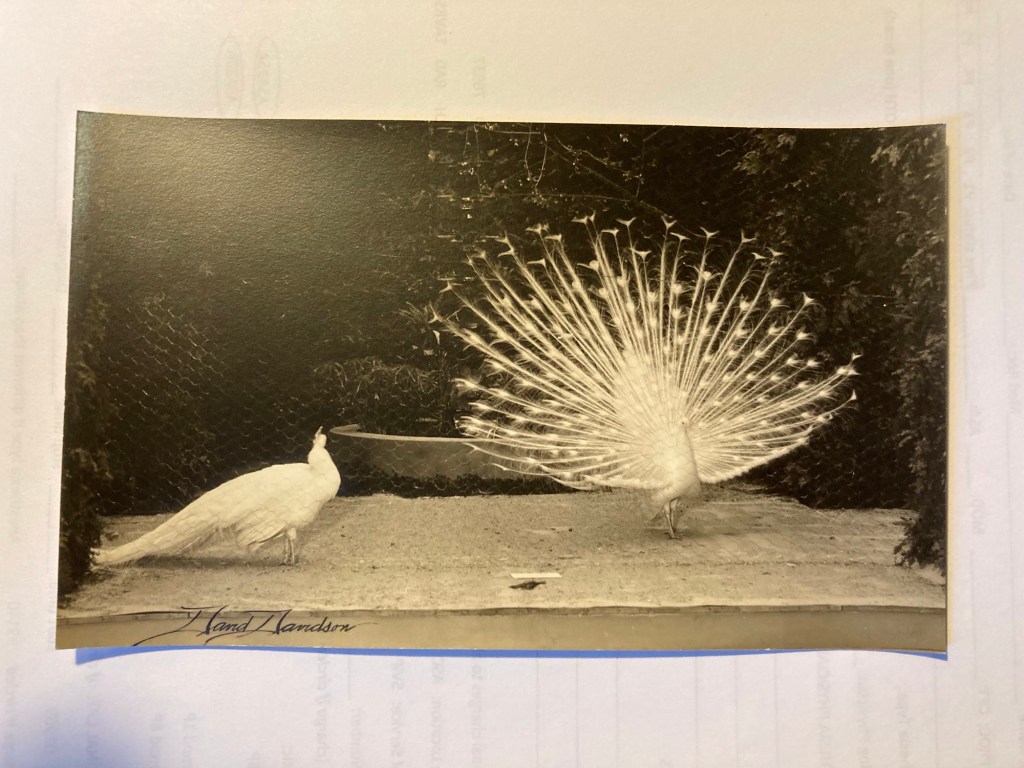
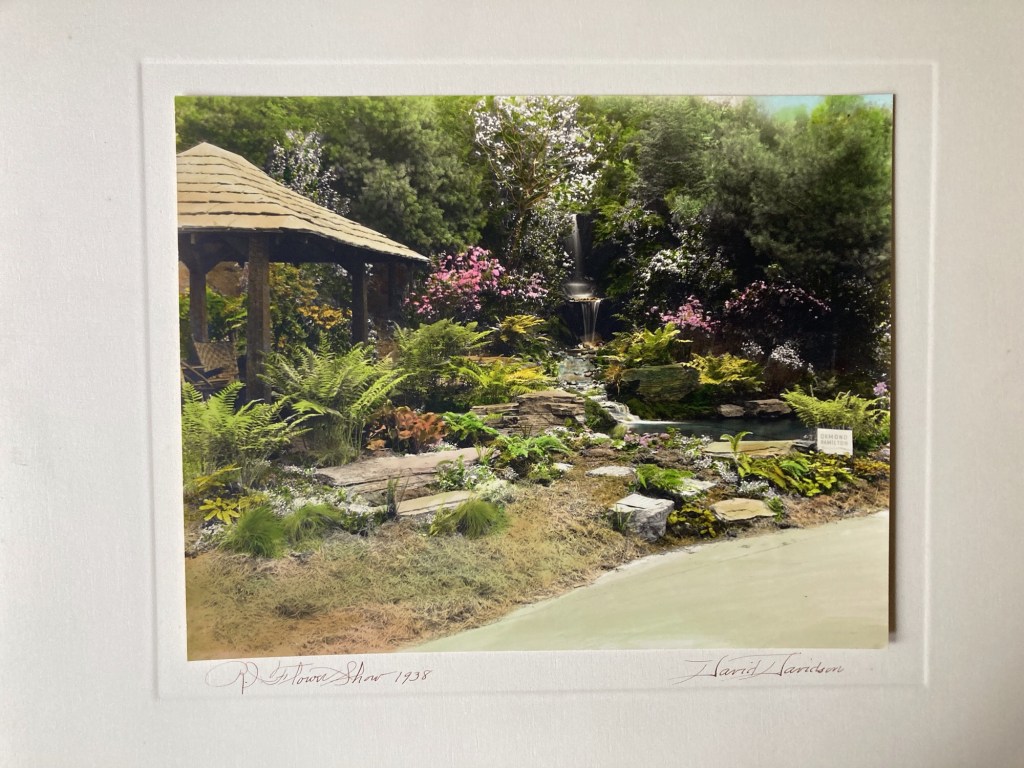
It was 2012 when I was fortunate enough to have purchased a box of pictures that Davidson took at “The Flower Shows”??? I knew nothing about flower shower pictures! In amongst all these fabulous colored garden scenes were pictures of Peacocks. Evidently one of the horticulturists participating in an annual flower show had brought along two Peacocks to enhance their display.
Just discovering The Flower Show pictures was exciting, but finding the picture of the Peacocks was an extra bonus. The interesting thing about all these pictures is that some of them were done in black and white.
I do have some extra Peacock pictures, so I would be in a position to sell off some of these. This would be a rare addition to your David Davidson collection. Email me if interested. I am just offering these to blog members.
The Flower Show Picture?? This is a story for another day…
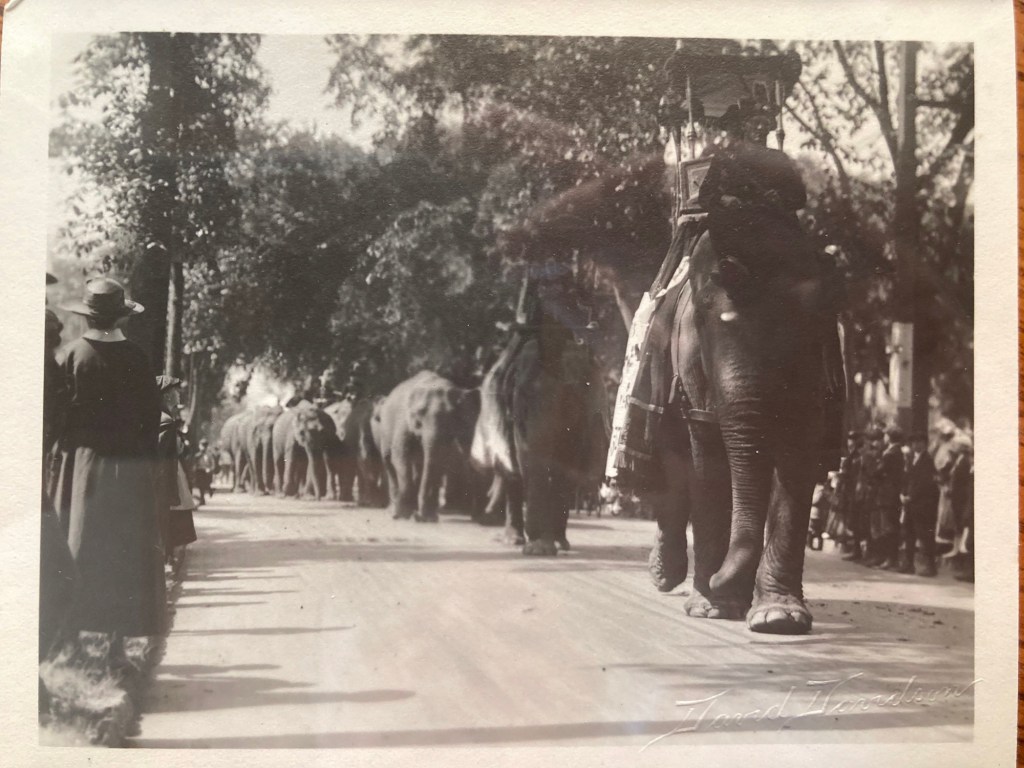
In the opening statement of the blog, I mentioned talking points to follow and one of them was Elephants. So here it is!
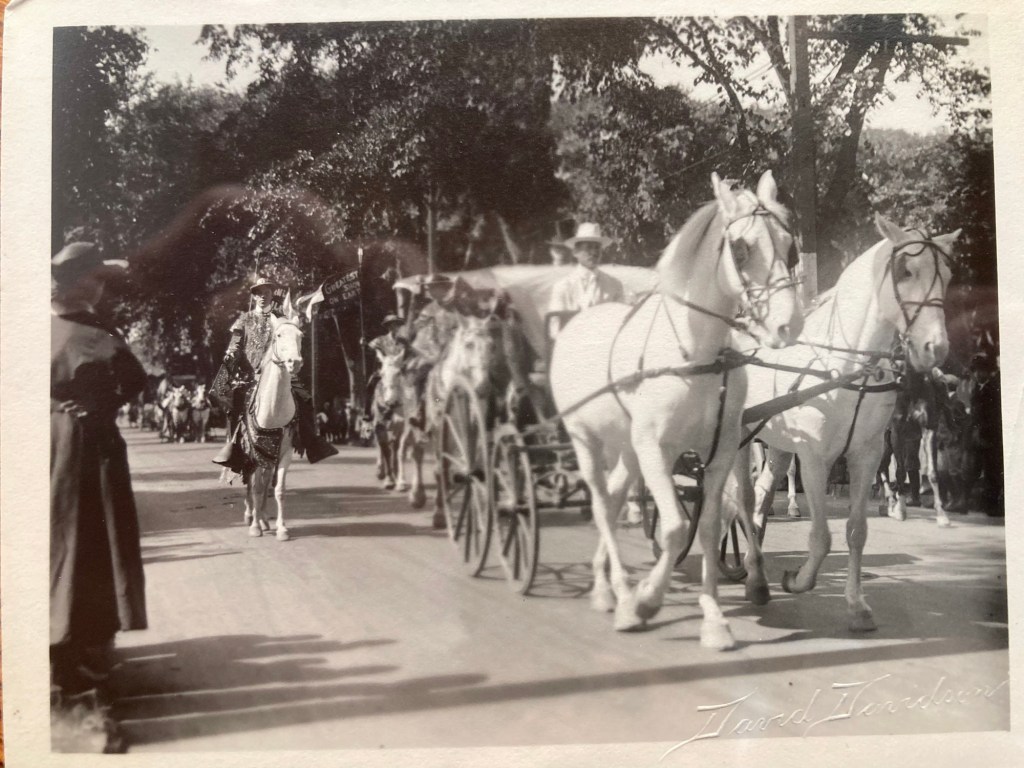
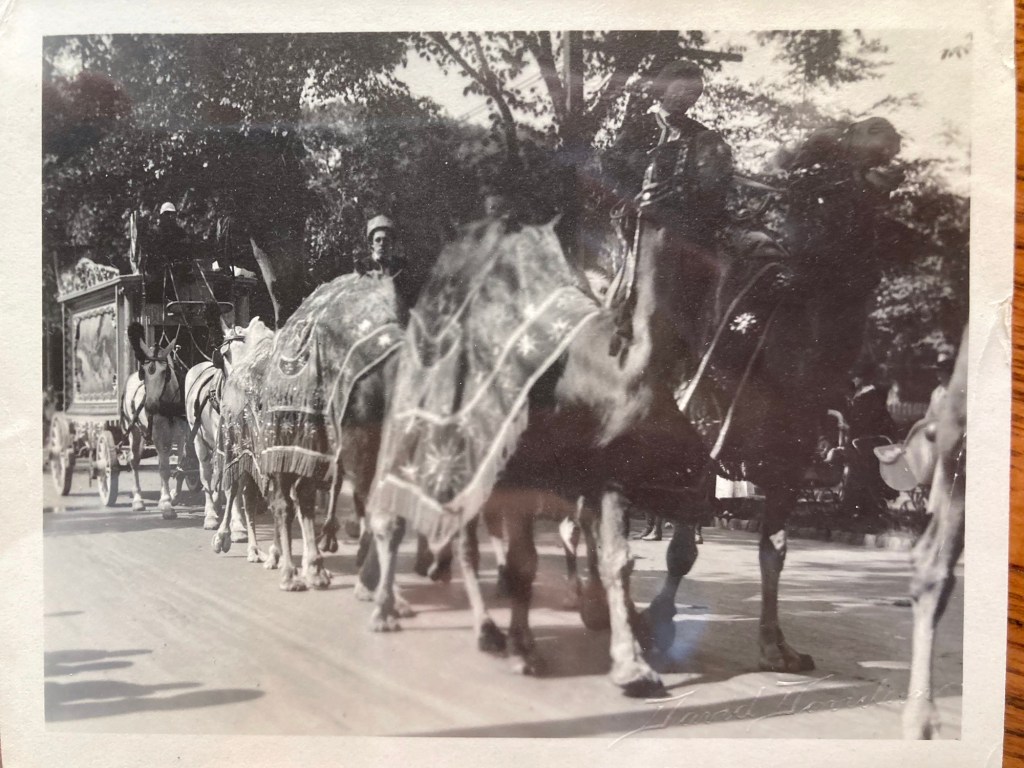
What I failed to mention was that along with a picture of Elephants, I also found a picture of a team of White Horses and a picture of Camels. To some of my readers, you may be saying “I don’t understand. What is the big deal about pictures Davidson took of Elephants, Horses and Camels?”. And then there are those of us that remember the Nutting Auctions that so many of us went to for all those years. Any picture with an animal in it brought special attention. Sheep were commonplace but Horses and Cows were more rare and brought higher prices. And any signed photo from one of these artists with an Elephant or Camel in it would have been very special.
So what’s the story behind these pictures? With the onset of WWI, David Davidson, at the request of the governor of Rhode Island, was assigned the job of capturing war related activities throughout the state. The photos were all taken in black and white and they were mostly signed with a Davidson embossed signature.
David Davidsons camera captured troop training, battle simulations, and parades. But at some point in time, Ringling Brothers Barnum and Bailey Circus must have paraded through the streets and Davidson was there to capture the event. In the photo of the white horses pulling a carriage, you can see a banner displaying the words “The Greatest Show on Earth”.
One of the great stories to come out of the half century of David Davidson Studios was the responsibility of capturing, in photos, Rhode Island’s involvement in WWI.
There are a variety of discussions as to how and when they met, so let me set the story straight!
The Golden Age of the hand-colored photography movement peaked in our country between 1900-1930. Collectively, Nutting and Davidson became responsible for the lion’s share of this art form.
But where did they meet? In a Church.
It’s the fall of 1900. The Davidson family attends church on Sundays at the Union Congregational Church in Providence, RI. David had been very involved in the church’s youth group activities. It was at one of these socials that the minister of the church approached David with a job opportunity. The minister of the church just happened to be Wallace Nutting.
Rev. Nutting was looking for someone to assist him at his home photography studio. David had just started his college courses at Brown University and the Nutting home was neighboring Roger Williams Park. In spite of the fact that the trip every day from Brown University to Roger Williams Park was more than an hour each way by trolly car, David gladly accepted the invitation at the wage of $0.25 an hour.
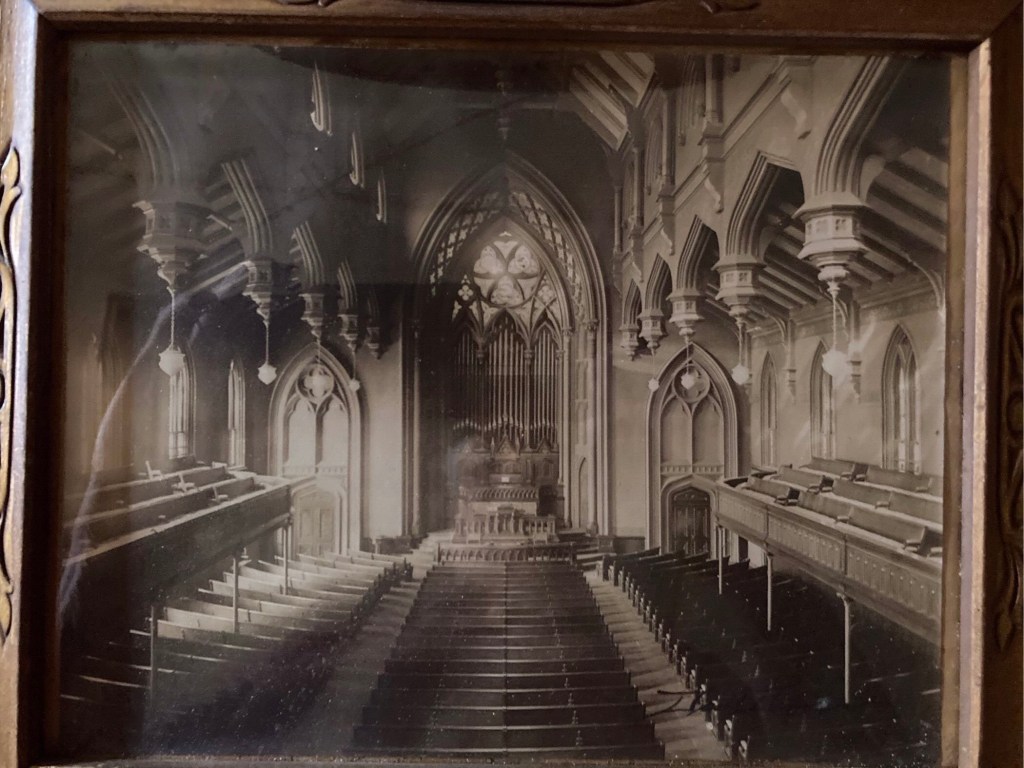
We believe this is a picture that Davidson took of the interior of the Union Congregational Church in Providence RI. Unfortunately, the signed, untitled photo is glued to a piece of cardboard so I cannot access the back of the photo, which could give me some information or an index number. Our assumption is that this is not a copyrighted photo and most likely one of a kind.
 The David Davidson Story